Why Are My Gutters Overflowing?
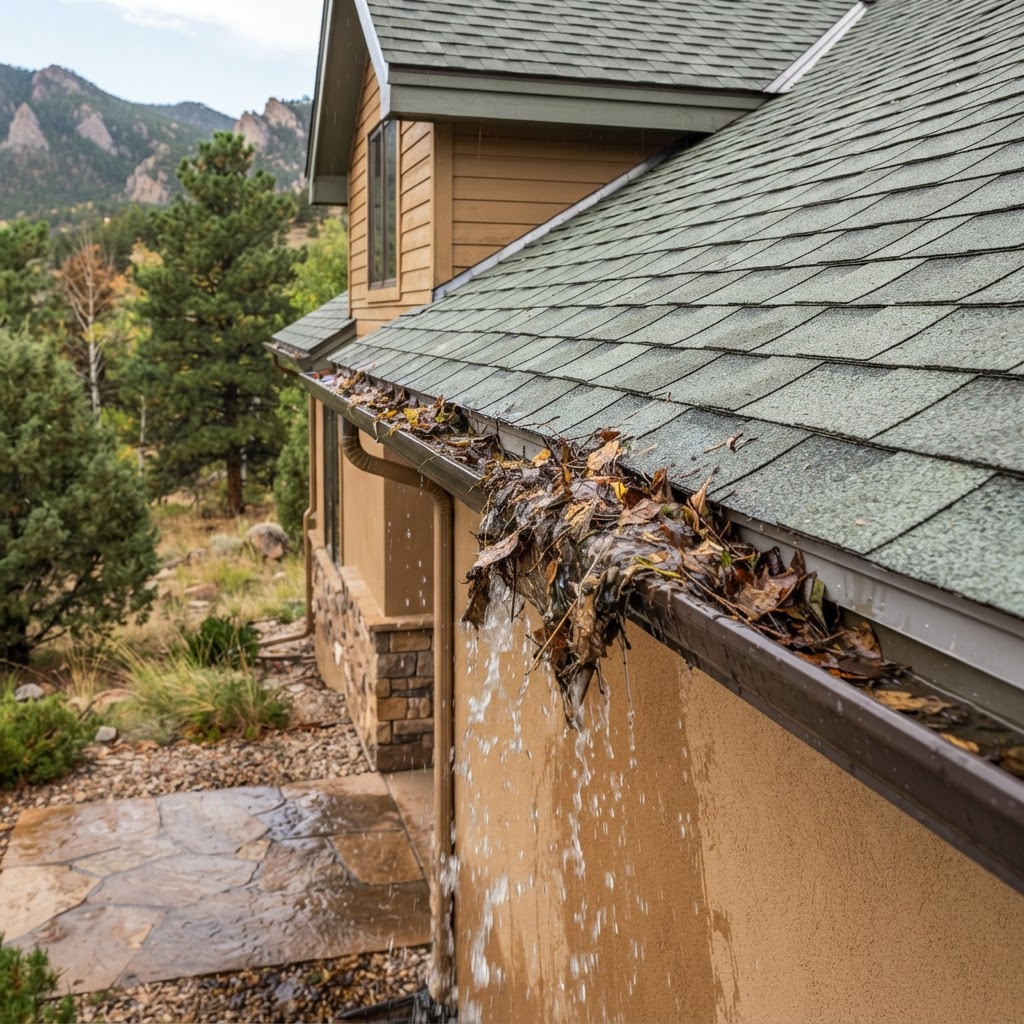
If your gutters are overflowing during a Denver rainstorm, the primary cause is almost always an obstruction in the drainage path that prevents water from reaching the downspouts. When gutters cannot carry water away from your roof, they become a liability rather than an asset. At Drift Exteriors, we see these issues constantly, and they usually stem from a combination of debris accumulation and structural inefficiencies.
Common Causes of Overflowing Gutters
- Debris Clogs: The most common culprit. Accumulated leaves, twigs, and sediment form dams that hold water in the trough.
- Blocked Downspouts: Even if your gutters look clear, debris often settles at the elbow of the downspout, creating a bottleneck.
- Improper Slope: Gutters need a slight pitch toward the downspout. If they are level or sagging, water pools in the center.
- Undersized Gutters: Homes with large roof surfaces may require six-inch gutters rather than standard five-inch units to handle heavy Colorado monsoons.
- Ice Dams: In winter, melting snow refreezes at the gutter line, preventing water from draining and forcing it over the edges.
Colorado-Specific Environmental Triggers
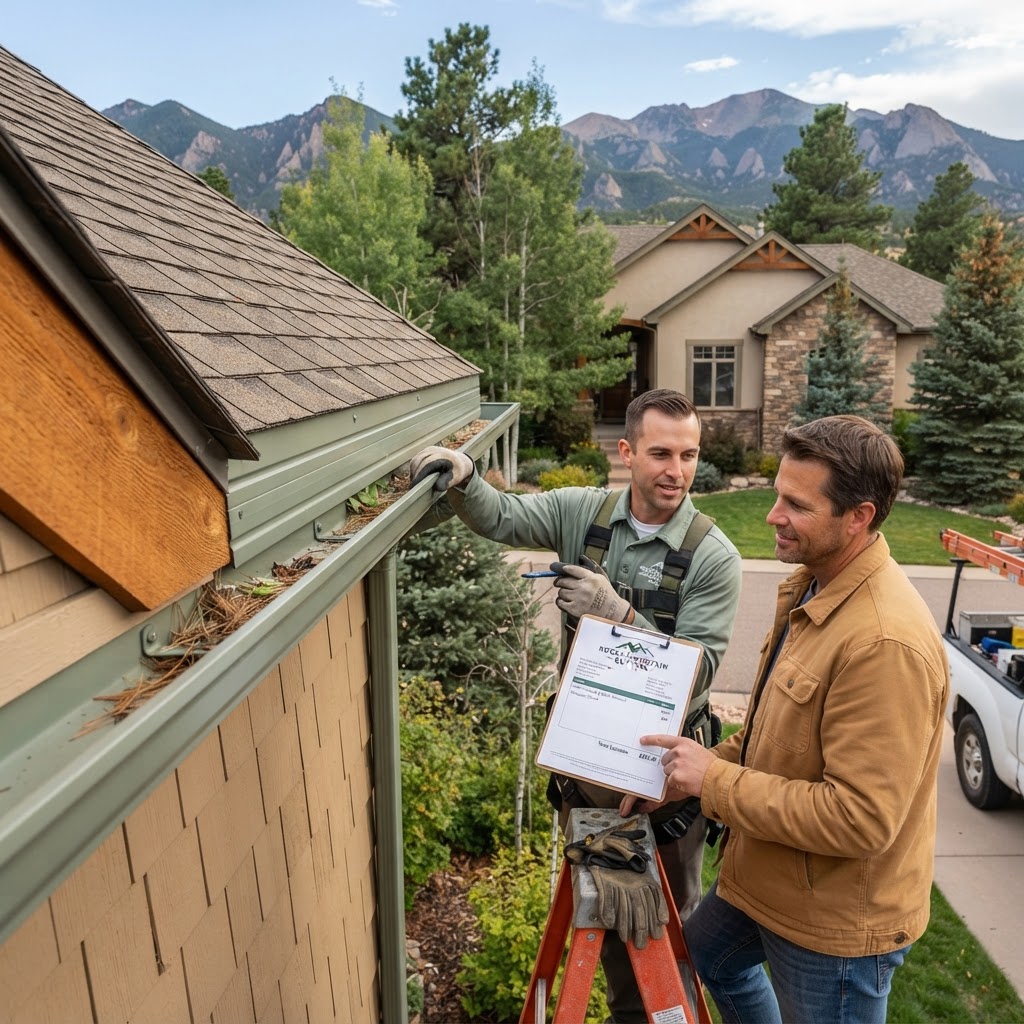
Homes in Westminster and Centennial face a unique set of drainage challenges. In the spring, the notorious cottonwood seed fluff acts like a filter, trapping fine debris and creating a paste that clogs systems quickly. Throughout the summer and fall, pine needles from native Colorado evergreens — especially in Lakewood and Arvada where mature canopies are dense — shed into gutters, creating dense, tangled mats that are difficult to flush out. Furthermore, our rapid freeze-thaw cycles in late autumn and early spring put immense pressure on gutter seams, often causing leaks.
Diagnosing the Problem
To identify where your system is failing, observe your home during a light rainstorm. Watch for areas where water pours over the front of the gutter rather than entering the downspout. If you notice water coming out of the top of the downspout or leaking from the seams, you likely have a clog at the elbow. If the water simply sits in the gutter without moving, you likely have an issue with the gutter's pitch or slope.
The Risks of Neglecting Overflow
Ignoring overflowing gutters is a recipe for property damage. Constant water spillover can lead to fascia rot, ruining the structural wood behind the gutter. More critically, water pooling near the house can erode your landscaping and saturate the soil around your foundation, which frequently leads to basement flooding and structural shifting.
When to Clean vs. Replace
If your gutters are structurally sound but simply dirty, a professional cleaning by Drift Exteriors will restore functionality. However, if your gutters are sagging, pulling away from the fascia, or riddled with holes and rusted seams, a full replacement is often the more cost-effective solution. Don't wait for the next Denver storm to find out your drainage system is failing; maintaining clear gutters is essential to protecting your investment.
Learn more about our professional gutter cleaning.