Pressure Washing vs House Washing (Soft Wash)
These terms are used interchangeably, but they're fundamentally different methods with very different outcomes.
Many homeowners use 'pressure washing' and 'house washing' interchangeably—but they're fundamentally different. Pressure washing uses high-pressure water (1,500-4,000 PSI) to blast surfaces clean. House washing (soft washing) uses low-pressure water and cleaning solutions to safely clean siding, roofing, and delicate surfaces. Using pressure washing on siding is one of the most common causes of preventable home damage.
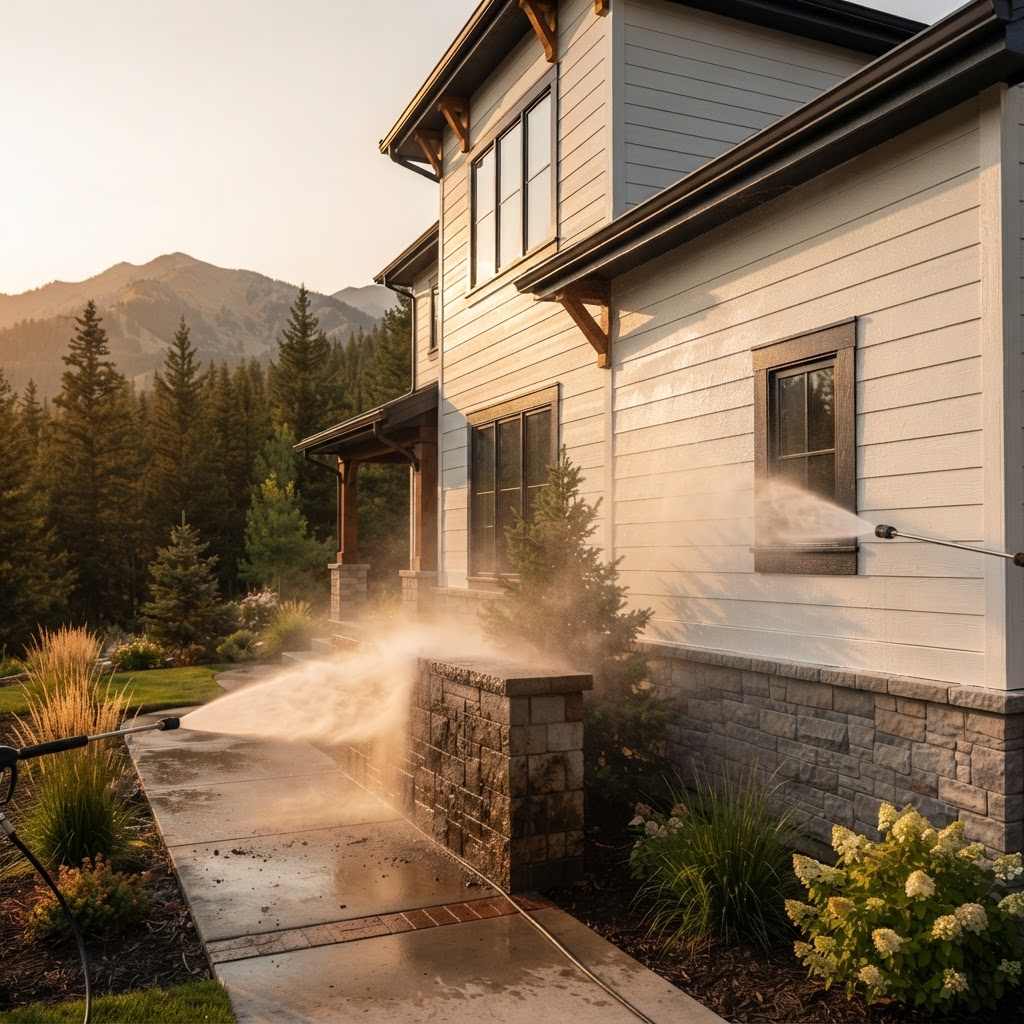
Pressure Washing vs House Washing (Soft Wash) at a Glance
| Feature | Pressure Washing | House Washing (Soft Wash) |
|---|---|---|
| Best For | Concrete, brick, pavers (never siding) | Siding, roofing, stucco, painted surfaces |
| Average Cost | $200-$350 (but risk of $1,000s in damage) | $400-$700 (safe, correct method) |
| Time Required | 2-3 hours | 3-5 hours |
| Longevity | 1-2 years (if surface survives) | 2-3 years—kills spores at root |
| Risk Level | Very high—permanent damage to siding | Very low when done professionally |
| Maintenance | Annual (if surface not damaged) | Every 2-3 years |
| DIY Friendly | Dangerous—high risk of damage | No—requires specialized equipment |
| Our Recommendation | House washing (soft washing) is the only safe method for cleaning home exteriors. Pressure washing should never be used on siding, roofing, or windows. If a company offers to 'pressure wash' your house, find a company that uses soft washing instead. | |
What Each Option Is
Pressure Washing
Pressure washing uses high-pressure water—1,500 to 4,000 PSI—through a specialized nozzle to physically blast away dirt and grime. While effective on hard surfaces like concrete and brick, it's dangerous when used on siding, roofing, or painted surfaces. The force can crack vinyl, dent aluminum, strip paint, and force water behind siding.
House Washing (Soft Wash)
House washing (soft washing) uses low-pressure water—under 500 PSI—combined with biodegradable cleaning solutions to safely clean siding, roofing, and painted surfaces. The solutions kill mold, mildew, algae, and bacteria at the cellular level, then are gently rinsed away. It's the industry-standard, manufacturer-recommended method for cleaning home exteriors.
Advantages & Disadvantages
Pressure Washing
Pros
- Effective on concrete, brick, and pavers
- Fast for large flat surfaces
- No chemicals needed for basic cleaning
- Good for preparing surfaces for sealing or painting
Cons
- Can permanently damage siding, roofing, and windows
- Forces water behind siding causing mold and rot
- Voids manufacturer warranties on siding and roofing
- Doesn't kill organic growth at the root
- High risk of personal injury
House Washing (Soft Wash)
Pros
- Safe for all siding types—vinyl, stucco, brick, wood
- Doesn't force water behind siding
- Kills organic growth at the root—results last 2-3x longer
- Won't void manufacturer warranties
- Cleans areas pressure washing can't reach safely
Cons
- Higher cost than pressure washing
- Requires specialized equipment and training
- Uses chemical solutions (biodegradable but still chemicals)
- Takes longer to apply and rinse properly
How Much Does Each Option Cost?
Pressure Washing
$200-$350
House Washing (Soft Wash)
$400-$700
Pressure washing is cheaper ($200-350) but the cost of repairing damaged siding ($500-5,000+) eliminates any savings. House washing costs $400-700 but is the safe, correct method for cleaning siding. The price difference is small compared to the risk of permanent damage.
Pricing varies by property size, condition, and location. These are educational estimates only—not formal quotes.
Head-to-Head Performance
| Metric | Pressure Washing | House Washing (Soft Wash) |
|---|---|---|
| Effectiveness | Dangerous on siding—causes damage | Excellent—kills organic growth safely |
| Longevity | 1-2 years (if surface survives) | 2-3 years—kills spores at root |
| Safety | Very high risk of permanent damage | Very low risk when done professionally |
| Environmental Impact | No chemicals, but dislodges material | Biodegradable solutions, properly managed |
| Appearance | Can leave streaks, etching, or damage | Even, streak-free, professional results |
| Maintenance | Annual (if surface not damaged) | Every 2-3 years |
Best Choice For Your Situation
Common Misconceptions
Pressure washing is the best way to clean house siding.
Pressure washing siding is dangerous. It forces water behind panels, damages seals, and voids warranties. House washing (soft washing) is the correct, safe method.
All exterior cleaning companies use the same method.
Methods vary significantly. Reputable companies use soft washing for siding. Untrained or budget companies may use pressure washing, which can cause permanent damage.
If pressure washing damaged my siding, I'd notice immediately.
Water intrusion damage often isn't visible for months. By the time you see mold or rot, the damage is extensive and expensive to repair.
House washing and pressure washing cost about the same.
Pressure washing is cheaper upfront but the risk of damage makes it far more expensive. A single incident of water damage can cost thousands.
Frequently Asked Questions
Get Colorado Homeowner Tips Straight to Your Inbox
Join other Colorado homeowners receiving seasonal maintenance reminders, cost-saving tips, and exclusive offers from Drift Exteriors. No spam — just helpful content.
Still Not Sure Which Option Is Right for Your Home?
Request a free property assessment and we'll recommend the safest and most effective solution for your specific exterior surfaces.