Pressure Washing (Wand) vs Surface Cleaning
The difference between a streaky driveway and a flawless one comes down to one piece of equipment.
If you've ever seen a driveway with visible streaks or 'zebra striping' after being cleaned, that's the hallmark of wand pressure washing. A surface cleaner is a flat, rotating attachment that delivers even, consistent pressure across a wider path. For any flat surface—driveways, patios, walkways—a surface cleaner produces dramatically better results than a traditional pressure washing wand.
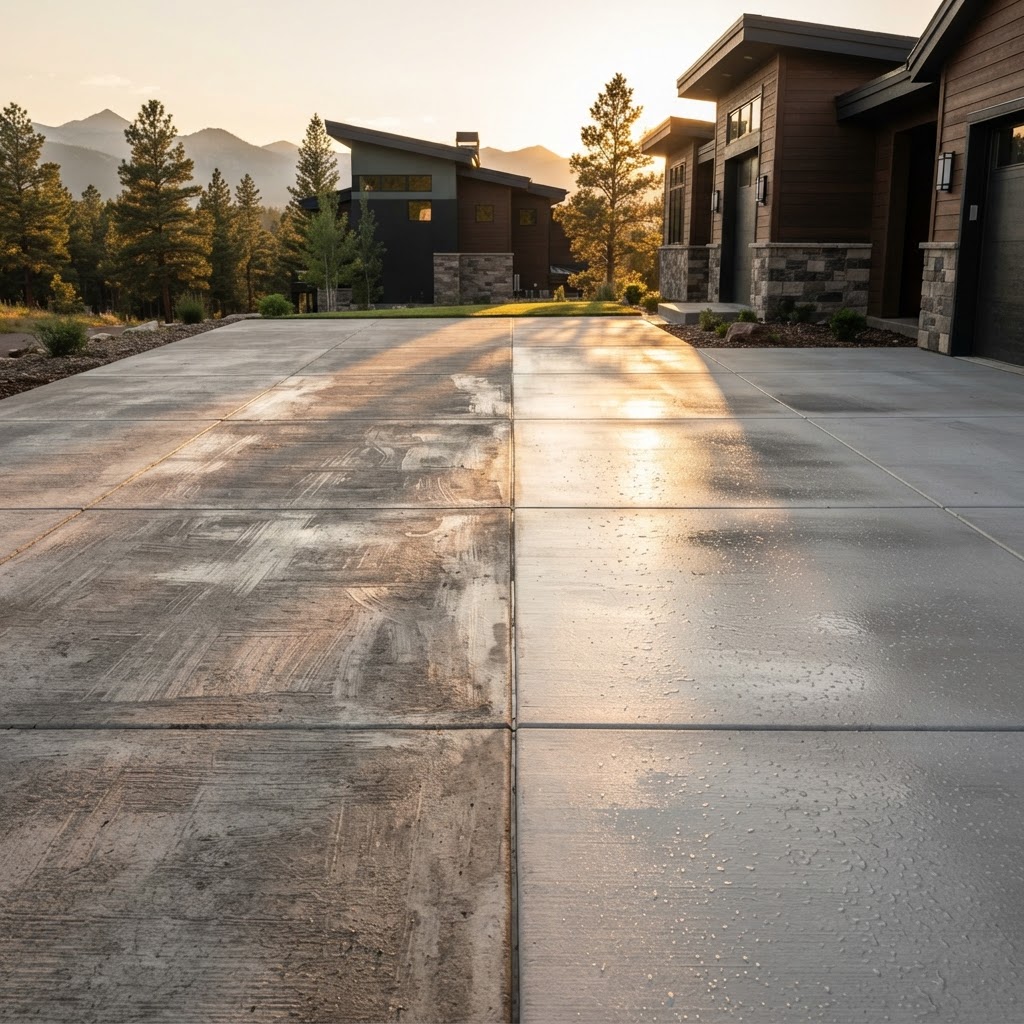
Pressure Washing (Wand) vs Surface Cleaning at a Glance
| Feature | Pressure Washing (Wand) | Surface Cleaning |
|---|---|---|
| Best For | Irregular surfaces, corners, vertical walls | Flat surfaces—driveways, patios, walkways |
| Average Cost | $250-$450 | $350-$650 |
| Time Required | Slower for large flat areas | Much faster—cleans 16-24 inch paths |
| Longevity | Same if done correctly | Same if done correctly |
| Risk Level | Higher risk of etching and streaking | Lower risk—consistent pressure |
| Maintenance | Annual cleaning recommended | Annual cleaning recommended |
| DIY Friendly | Yes—wand is standard equipment | Possible—surface cleaners available for rent |
| Our Recommendation | For any visible flat surface—driveways, patios, walkways—surface cleaning is the clear winner. The results are dramatically better and last longer. Use wand pressure washing only for irregular surfaces, vertical walls, or tight spaces where a surface cleaner can't reach. | |
What Each Option Is
Pressure Washing (Wand)
Standard pressure washing uses a wand—a long metal tube with a trigger and a nozzle at the end. The operator manually moves the wand back and forth across the surface. This method works but creates uneven cleaning because the nozzle concentrates water in a small point, leaving some areas cleaner than others.
Surface Cleaning
Surface cleaning uses a flat, round attachment (typically 16-24 inches in diameter) with a rotating bar that sprays water downward. The operator pushes the surface cleaner across the flat surface like a lawnmower. The rotating bar delivers even, consistent pressure across the entire path, eliminating streaks and producing a uniform clean.
Advantages & Disadvantages
Pressure Washing (Wand)
Pros
- Lower cost—no specialized attachment needed
- Better for irregular surfaces and corners
- Can reach vertical surfaces and walls
- Works in tight spaces where surface cleaners can't fit
- More widely available from rental stores
Cons
- Creates visible streaks and zebra striping
- Inconsistent pressure across the surface
- Slower for large flat areas
- Can etch concrete if held too close
- Unprofessional appearance on visible surfaces
Surface Cleaning
Pros
- Even, streak-free results on flat surfaces
- Much faster for driveways and patios
- No zebra striping or visible cleaning lines
- Consistent pressure—won't etch concrete
- Professional-looking results every time
Cons
- Higher cost due to specialized equipment
- Not suitable for vertical or irregular surfaces
- Requires a compatible pressure washer
- Can't reach edges and corners—wand needed for detail work
How Much Does Each Option Cost?
Pressure Washing (Wand)
$250-$450
Surface Cleaning
$350-$650
Surface cleaning adds $100-200 to a standard pressure washing job because it requires a specialized attachment. However, the results are dramatically better—no streaks, no zebra striping, no missed spots. For visible areas like driveways and patios, the upgrade is almost always worth it. For hidden areas like side walkways, standard pressure washing may be sufficient.
Pricing varies by property size, condition, and location. These are educational estimates only—not formal quotes.
Head-to-Head Performance
| Metric | Pressure Washing (Wand) | Surface Cleaning |
|---|---|---|
| Effectiveness | Inconsistent—streaks and missed spots | Even, consistent cleaning across entire surface |
| Longevity | Same—depends on sealing and traffic | Same—depends on sealing and traffic |
| Safety | Higher risk of etching with wrong technique | Lower risk—consistent pressure prevents etching |
| Environmental Impact | More water waste due to inefficiency | More efficient water use |
| Appearance | Streaky, uneven results | Clean, professional, streak-free |
| Maintenance | Annual cleaning recommended | Annual cleaning recommended |
Best Choice For Your Situation
Common Misconceptions
A pressure washing wand is just as effective as a surface cleaner.
Wands create uneven cleaning with visible streaks. Surface cleaners deliver consistent, streak-free results that look noticeably better.
Surface cleaners are only for professional use.
Surface cleaners are available for rent at most equipment stores and attach to consumer-grade pressure washers. They're easy to use and dramatically improve DIY results.
Surface cleaners cost a lot more than wand cleaning.
The cost difference is typically $100-200 on a standard job. For visible areas like driveways and patios, the quality difference is worth the investment.
Frequently Asked Questions
Explore More
Get Colorado Homeowner Tips Straight to Your Inbox
Join other Colorado homeowners receiving seasonal maintenance reminders, cost-saving tips, and exclusive offers from Drift Exteriors. No spam — just helpful content.
Still Not Sure Which Option Is Right for Your Home?
Request a free property assessment and we'll recommend the safest and most effective solution for your specific exterior surfaces.