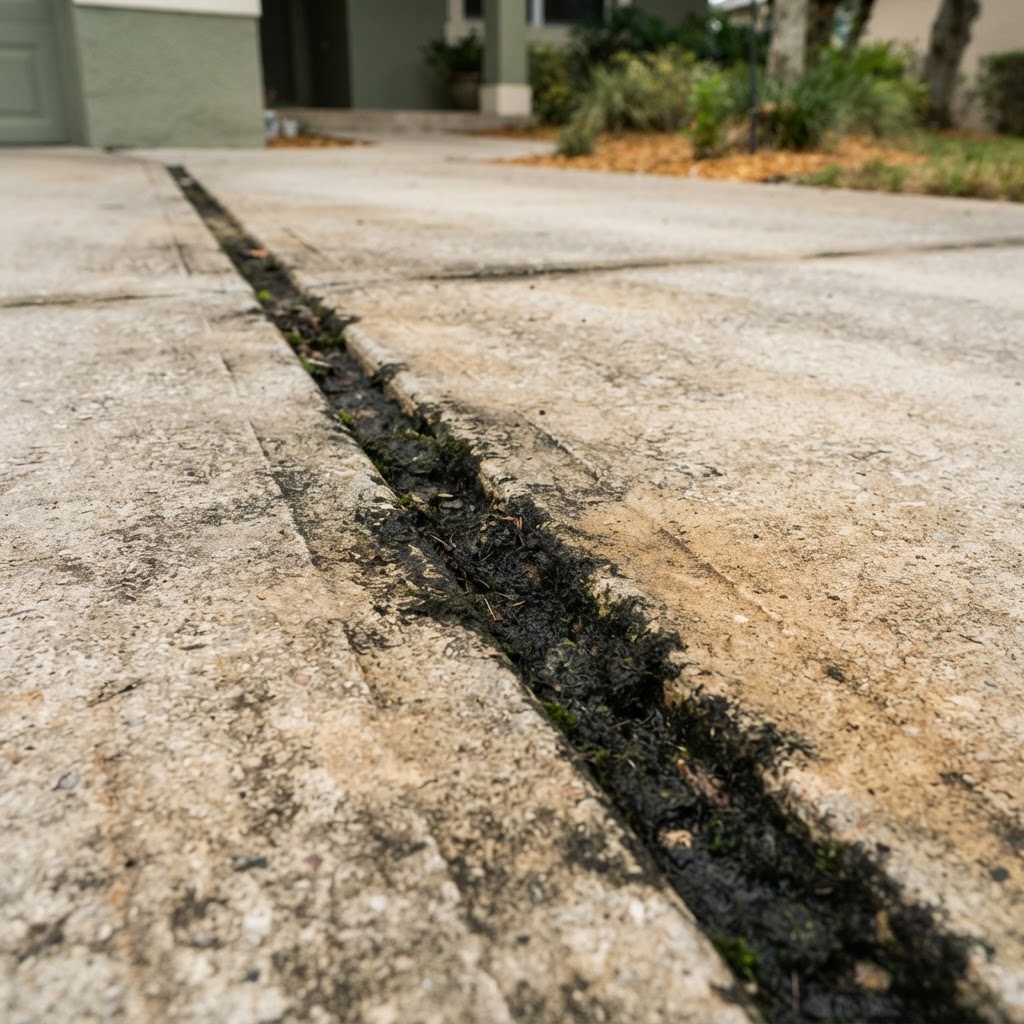
Why Is My Concrete Turning Black?
If you have noticed unsightly dark patches appearing on your driveway or patio, you are not alone. When concrete begins to turn black, it is rarely just dirt; it is usually a sign of biological growth or chemical accumulation. At Drift Exteriors, we help Thornton homeowners restore their concrete to its original state by identifying exactly what is causing these dark deposits.
The Common Culprits Behind Dark Concrete
Understanding why your concrete is losing its curb appeal starts with identifying the source. The most frequent causes include:
- Algae and Lichen: These organisms thrive in moisture-rich environments, often starting as a fine, slippery film.
- Mold and Mildew: These fungi feed on organic debris trapped within the porous surface of the concrete.
- Tire Rubber and Oil: Heavy traffic areas often accumulate carbon-based residue that bonds deeply with the concrete surface.
- Manganese Mineral Deposits: In some areas, groundwater minerals can oxidize upon hitting the surface, leaving behind permanent-looking dark stains.
Colorado-Specific Environmental Factors
Northglenn’s unique climate plays a significant role in concrete degradation. Our high altitude and variable weather patterns create the perfect storm for organic growth. North-facing surfaces stay damp significantly longer due to limited sun exposure, which encourages algae colonization. Furthermore, our heavy spring snowmelt keeps driveways saturated for weeks, while aggressive sprinkler overspray during the dry summer months ensures that shaded areas remain perpetually moist. These consistent moisture cycles turn your hardscape into a feeding ground for mold and mildew.
Colorado Pro Tip: In Northglenn and Centennial, to minimize discoloration, adjust your lawn sprinkler heads away from your driveway and sidewalk. Even small amounts of constant overspray create a permanent damp zone that will inevitably turn black regardless of how often you clean it.
Diagnosing the Stain
You can often determine the treatment method by looking closely at the coloration:
- Greenish tint: This indicates an active algae infestation.
- Flat, matte black: This is almost certainly mold or mildew colonization.
- Streaked or patchy black: This usually points to tire rubber deposits or automotive fluid drippings.
Professional Cleaning Solutions
Addressing these stains requires more than a standard garden hose. For organic growth like mold and algae, Drift Exteriors utilizes a specialized soft wash process involving sodium hypochlorite. This solution kills the spores at the root rather than just washing the surface. For oil and rubber-based stains, a targeted degreaser is necessary to lift the carbon bonds before a final high-pressure rinse. If your concrete has developed deep-set manganese staining or years of neglected buildup, professional concrete cleaning is the safest way to ensure a bright, uniform result without damaging the structural integrity of your driveway or pavers.
Learn more about our professional concrete cleaning.