Polymeric Sand vs Standard Joint Sand
Standard sand washes out and grows weeds. Polymeric sand hardens and lasts for years. The small cost difference is worth it.
Polymeric sand and standard joint sand are the two options for filling paver joints. Standard sand is the traditional choice—it's cheap but washes out, allows weed growth, and needs frequent re-sanding. Polymeric sand is a modern alternative that hardens when activated with water, resisting weeds, preventing insect infiltration, and stabilizing pavers for years.
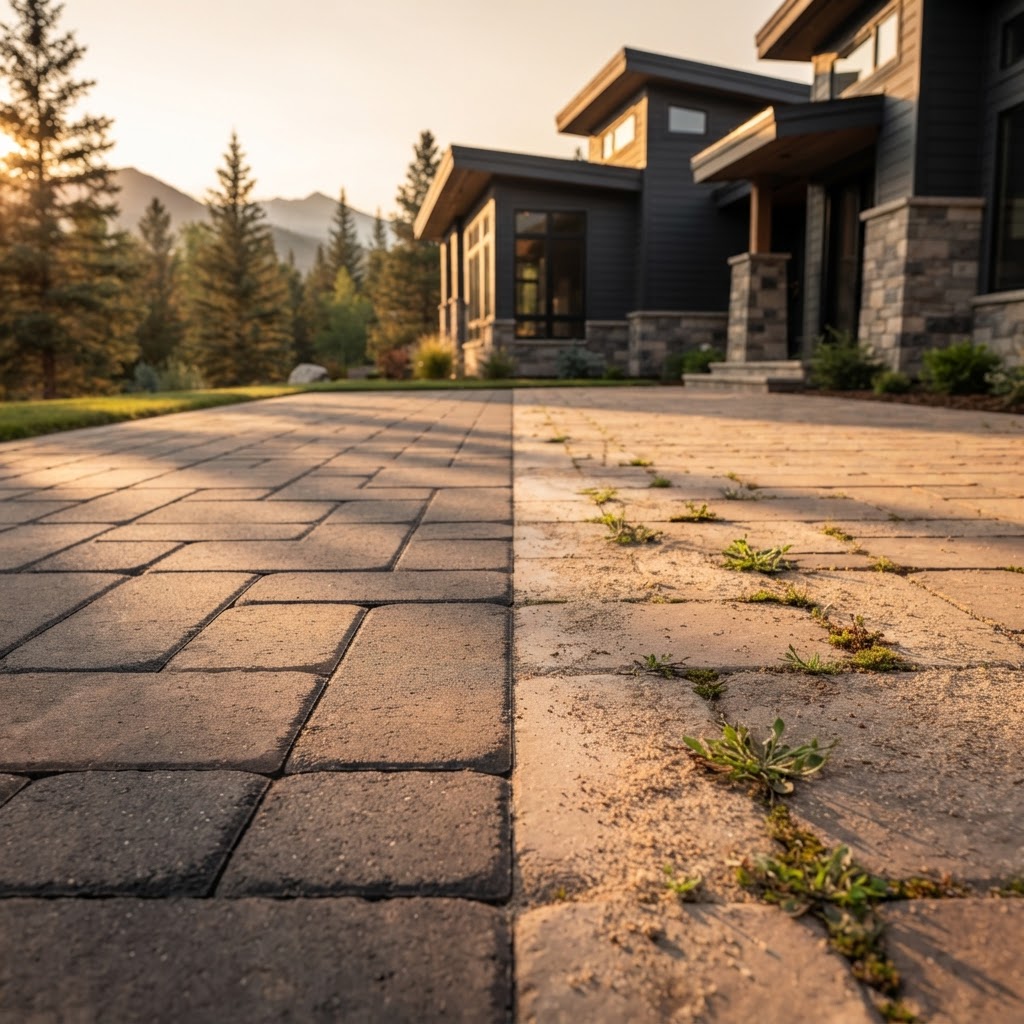
Polymeric Sand vs Standard Joint Sand at a Glance
| Feature | Polymeric Sand | Standard Joint Sand |
|---|---|---|
| Best For | All paver installations—stability and weed prevention | Budget projects only—temporary solution |
| Average Cost | $25-$40 per bag (plus installation) | $5-$10 per bag (plus installation) |
| Time Required | Same installation time | Same installation time |
| Longevity | 3-5 years before reapplication | 1 year before washout |
| Risk Level | Low—standard installation | Very low—simple sand |
| Maintenance | Re-sand every 3-5 years | Re-sand annually |
| DIY Friendly | Possible—requires proper activation | Yes—simple to install |
| Our Recommendation | Always use polymeric sand for paver joints. The small cost difference ($50-100 for a typical patio) is worth the dramatic improvement in performance. Polymeric sand prevents weeds, stabilizes joints, and lasts 3-5 years vs annual re-sanding with standard sand. | |
What Each Option Is
Polymeric Sand
Polymeric sand is a specialized joint sand containing polymer additives. When activated with water, it hardens and binds paver joints together. It resists weed growth, prevents insect infiltration, and stabilizes pavers for 3-5 years. It's the recommended choice for all paver installations.
Standard Joint Sand
Standard joint sand is basic fine sand swept into paver joints. It provides initial stability but washes out with rain, allows weed growth, and doesn't prevent insect infiltration. It's cheaper upfront but requires frequent re-sanding and creates ongoing maintenance issues.
Advantages & Disadvantages
Polymeric Sand
Pros
- Hardens and stabilizes paver joints
- Resists weed growth significantly
- Prevents insect infiltration
- Lasts 3-5 years before reapplication
- Resists washout from rain and irrigation
- Provides superior paver stability
Cons
- Higher material cost ($25-40 per bag)
- Requires clean, dry joints for installation
- Must be activated with water properly
- Can leave haze on pavers if not cleaned properly
- Over-saturation can cause joint failure
Standard Joint Sand
Pros
- Lower material cost ($5-10 per bag)
- Easy to install
- Widely available
- Simple to re-sand when needed
Cons
- Washes out with rain and irrigation
- Allows weed growth in joints
- Permits insect infiltration
- Needs annual re-sanding
- Provides minimal paver stability
- Creates ongoing maintenance
How Much Does Each Option Cost?
Polymeric Sand
$25-$40 per bag (plus installation)
Standard Joint Sand
$5-$10 per bag (plus installation)
Polymeric sand costs $25-40 per bag vs $5-10 for standard sand. For a typical patio, the cost difference is $50-100 in materials. Including professional installation, polymeric sand adds $100-200 to the job. Given the dramatic difference in performance—weed prevention, joint stability, and longevity—polymeric sand is worth the small additional cost.
Pricing varies by property size, condition, and location. These are educational estimates only—not formal quotes.
Head-to-Head Performance
| Metric | Polymeric Sand | Standard Joint Sand |
|---|---|---|
| Effectiveness | Excellent—hardens and stabilizes joints | Poor—washes out and allows weeds |
| Longevity | 3-5 years before reapplication | 1 year before washout |
| Safety | Low risk—standard installation | Very low risk—simple sand |
| Environmental Impact | Polymer additives—follow guidelines | Natural sand—no additives |
| Appearance | Clean, stable joints | Gaps, weeds, and washout visible |
| Maintenance | Re-sand every 3-5 years | Re-sand annually |
Best Choice For Your Situation
Common Misconceptions
Standard sand works fine for paver joints.
Standard sand washes out with rain, allows weed growth, and doesn't prevent insect infiltration. Polymeric sand hardens and provides superior joint stability, weed prevention, and longevity.
Polymeric sand is too expensive.
The cost difference is $50-100 in materials for a typical patio. Given the dramatic improvement in performance and reduced maintenance, polymeric sand is worth the small additional cost.
Polymeric sand prevents all weeds.
Polymeric sand significantly reduces weed growth but doesn't eliminate it completely. Seeds can still germinate on the surface. However, it prevents the deep-rooted weed growth that standard sand allows.
Frequently Asked Questions
Explore More
Get Colorado Homeowner Tips Straight to Your Inbox
Join other Colorado homeowners receiving seasonal maintenance reminders, cost-saving tips, and exclusive offers from Drift Exteriors. No spam — just helpful content.
Still Not Sure Which Option Is Right for Your Home?
Request a free property assessment and we'll recommend the safest and most effective solution for your specific exterior surfaces.