Sealed Pavers vs Unsealed Pavers
Sealed pavers resist stains, stabilize joints, and stay cleaner. Unsealed pavers stain permanently and need more maintenance.
Sealed and unsealed pavers look similar when new, but they age very differently. Sealed pavers resist staining, maintain joint stability, enhance color, and stay cleaner longer. Unsealed pavers absorb stains, grow weeds in joints, lose sand to erosion, and may suffer surface damage in Colorado's freeze-thaw cycles. Understanding the difference helps you protect your paver investment.
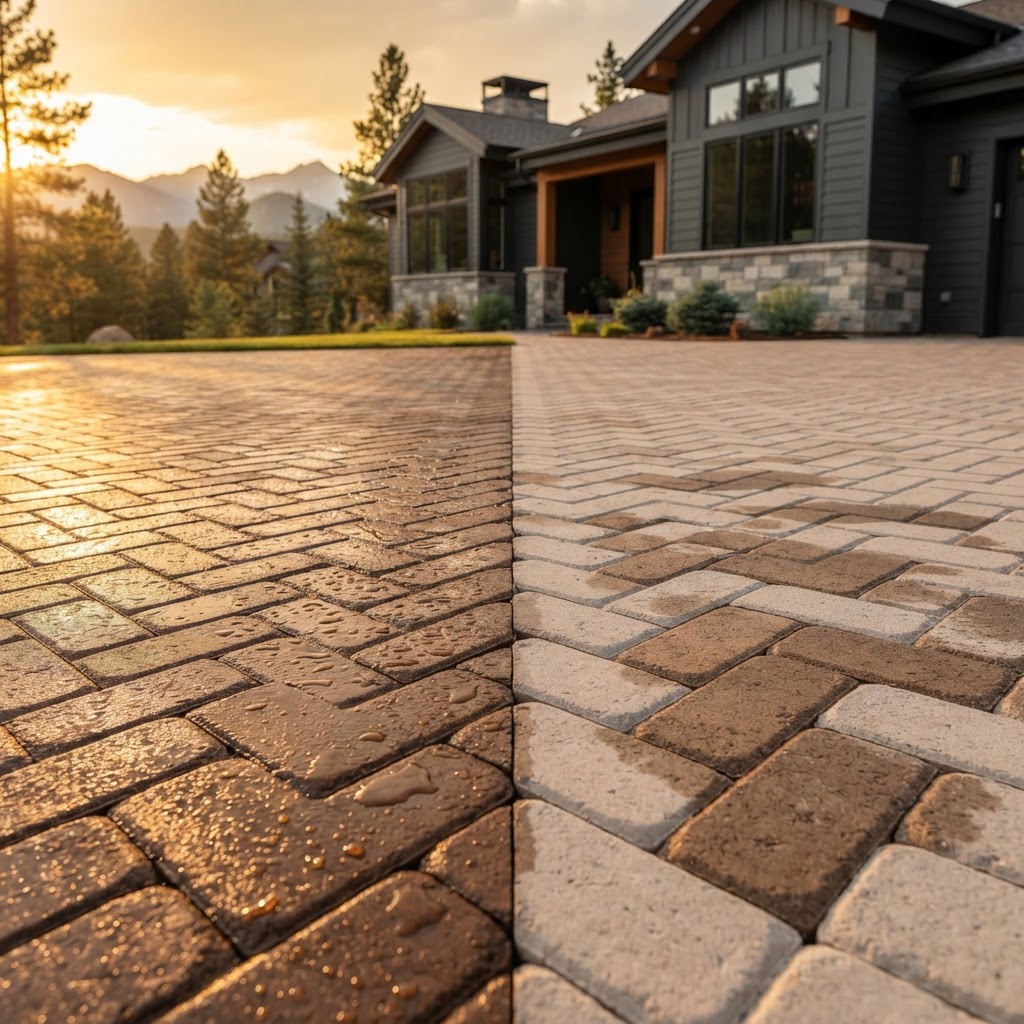
Sealed Pavers vs Unsealed Pavers at a Glance
| Feature | Sealed Pavers | Unsealed Pavers |
|---|---|---|
| Best For | All paver installations—protection and longevity | Budget-constrained projects only |
| Average Cost | $300-$1,000 (sealing, every 3-5 years) | $0 (no sealing cost) |
| Time Required | 1 day (including drying) | No time required |
| Longevity | Sealer lasts 3-5 years | No protection—permanent stain risk |
| Risk Level | Low—standard application | High risk of permanent staining |
| Maintenance | Clean every 2-3 years, reseal every 3-5 | Clean annually, repair joints frequently |
| DIY Friendly | Possible but requires proper preparation | Not applicable |
| Our Recommendation | Always seal pavers. The upfront cost ($300-1,000) is small compared to the cost of stain removal, joint repair, and premature replacement. Seal new pavers 60-90 days after installation, and reseal every 3-5 years. In Colorado's freeze-thaw climate, sealing is essential for paver longevity. | |
What Each Option Is
Sealed Pavers
Sealed pavers have a protective coating applied to clean, dry paver surfaces. The sealer penetrates the surface and joints, creating a barrier against stains, moisture, and UV damage. Sealing enhances color, stabilizes joint sand, and extends paver life. It's recommended for all paver installations, especially in Colorado's freeze-thaw climate.
Unsealed Pavers
Unsealed pavers have no protective coating. They're exposed to stains, moisture penetration, UV fading, and joint erosion. While unsealed pavers have no sealing cost, they typically need more frequent cleaning, suffer permanent staining, and may experience joint instability and surface damage over time.
Advantages & Disadvantages
Sealed Pavers
Pros
- Resists oil, rust, and food stains
- Stabilizes joint sand—prevents erosion
- Enhances and maintains paver color
- Makes future cleaning easier
- Protects against freeze-thaw surface damage
- Reduces weed growth in joints
Cons
- Upfront cost ($300-$1,000)
- Needs reapplication every 3-5 years
- Requires proper surface preparation
- Some sealers can enhance sheen (may not be desired)
Unsealed Pavers
Pros
- No sealing cost
- Natural, matte appearance
- No sealer reapplication needed
Cons
- Stains penetrate permanently
- Joint sand erodes—pavers shift
- Weeds grow easily in joints
- Color fades from UV exposure
- Needs more frequent cleaning
- Surface damage from freeze-thaw cycles
How Much Does Each Option Cost?
Sealed Pavers
$300-$1,000 (sealing, every 3-5 years)
Unsealed Pavers
$0 (no sealing cost)
Sealing pavers costs $300-1,000 depending on area size. Unsealed pavers have no sealing cost but may need more frequent cleaning ($200-500 annually vs $200-500 every 2-3 years for sealed). Sealing is a small investment that prevents staining, stabilizes joints, and extends paver life. Over 10 years, sealing typically saves money by reducing cleaning frequency and preventing damage.
Pricing varies by property size, condition, and location. These are educational estimates only—not formal quotes.
Head-to-Head Performance
| Metric | Sealed Pavers | Unsealed Pavers |
|---|---|---|
| Effectiveness | Excellent—resists stains and stabilizes joints | Poor—stains penetrate, joints erode |
| Longevity | Sealer lasts 3-5 years | No protection—permanent staining risk |
| Safety | Low risk—standard application | No application risk |
| Environmental Impact | Sealer chemicals—follow guidelines | No chemicals, but more cleaning needed |
| Appearance | Enhanced color, maintained appearance | Fades and stains over time |
| Maintenance | Clean every 2-3 years, reseal every 3-5 | Clean annually, repair joints frequently |
Best Choice For Your Situation
Common Misconceptions
Paver sealing is unnecessary.
Sealing protects against staining, stabilizes joints, enhances color, and extends paver life. In Colorado's freeze-thaw climate, sealing helps prevent surface damage and joint erosion.
Sealing makes pavers slippery.
Quality sealers are designed to maintain traction. Some sealers can create a slight sheen but don't significantly reduce grip. Choose the right sealer type for your application.
Sealed pavers don't need cleaning.
Sealed pavers still need cleaning, but less frequently. Sealing makes cleaning easier because dirt and stains don't penetrate as deeply. Plan to clean sealed pavers every 2-3 years.
Frequently Asked Questions
Get Colorado Homeowner Tips Straight to Your Inbox
Join other Colorado homeowners receiving seasonal maintenance reminders, cost-saving tips, and exclusive offers from Drift Exteriors. No spam — just helpful content.
Still Not Sure Which Option Is Right for Your Home?
Request a free property assessment and we'll recommend the safest and most effective solution for your specific exterior surfaces.