The Driveway That Looked Ruined
A homeowner in Arvada called us convinced their driveway needed to be replaced. Large dark patches had spread across the concrete over several years, and every DIY cleaning attempt — bleach, household cleaners, a rental pressure washer — had made no difference. The surface looked permanently stained.
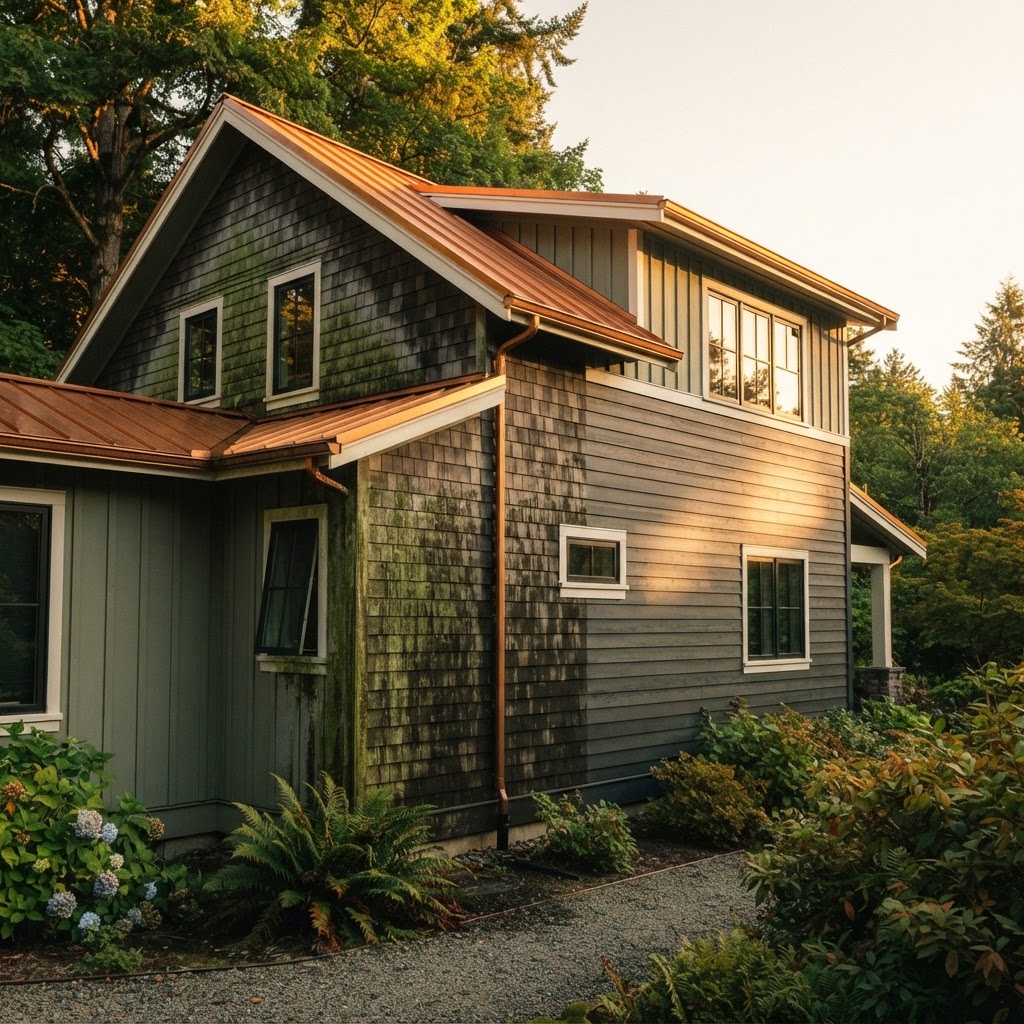
What we found when we arrived was something we see on Aurora driveways all the time: the "staining" wasn't staining at all. It was biological growth — a combination of algae and mold that had colonized the concrete surface and embedded itself in the microscopic pores of the material.
Quick Summary
A Lafayette driveway that appeared permanently stained was actually covered in biological algae growth. Professional pressure washing with a surface cleaner and biodegradable cleaning solution removed years of buildup in a single visit, revealing the original concrete surface underneath. The homeowner saved thousands compared to driveway replacement.
The Situation: A Driveway That Hadn't Been Cleaned in Years
The property sat on a north-facing lot with mature trees providing shade for most of the day. The driveway received minimal direct sunlight, and the homeowner's sprinkler system oversprayed the concrete edge every morning. These three factors — shade, moisture, and organic debris — created the perfect environment for biological growth.
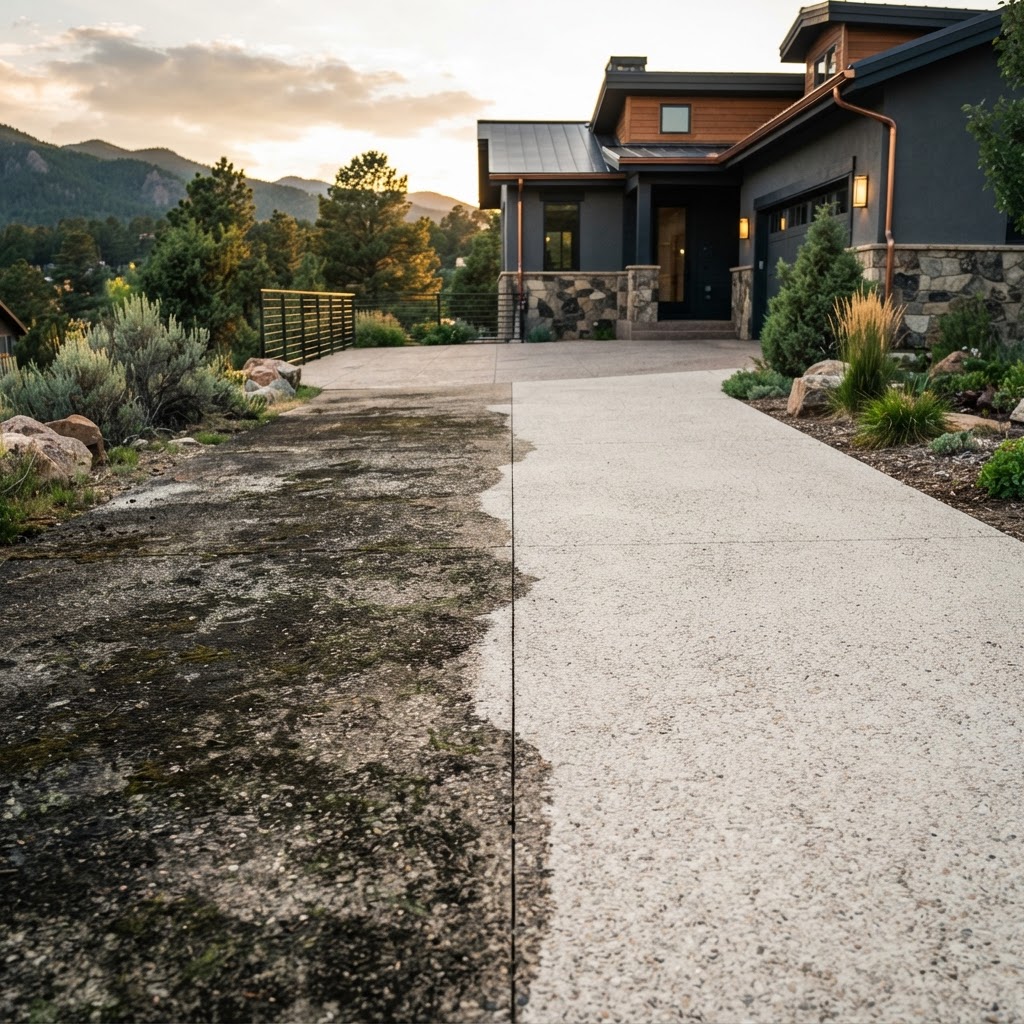
Over five years, green algae had turned brown and then nearly black as it layered and died back each winter. The result looked identical to oil staining or permanent concrete discoloration. No amount of household cleaning could remove it because the organisms lived inside the concrete pores, not just on the surface.
What We Found During Assessment
Before starting any work, we conducted a surface assessment:
- Stain type: Biological (algae and mold), not oil or rust
- Penetration depth: Surface-level only — no structural damage
- Concrete condition: Sound, no spalling or cracking from the growth
- Sprinkler overspray: Identified as the moisture source fueling growth
The diagnosis was straightforward: this driveway didn't need replacement or resurfacing. It needed a professional clean.
The Solution: Professional Concrete Cleaning
We used a three-step process to restore the surface:
Step 1: Pre-Treatment
We applied a biodegradable concrete cleaner designed to kill algae and mold at the root. This solution breaks down the biological organisms embedded in the concrete pores — something surface-level pressure washing alone cannot do. We let it dwell for 15 minutes to fully activate.
Step 2: Surface Cleaner Pressure Washing
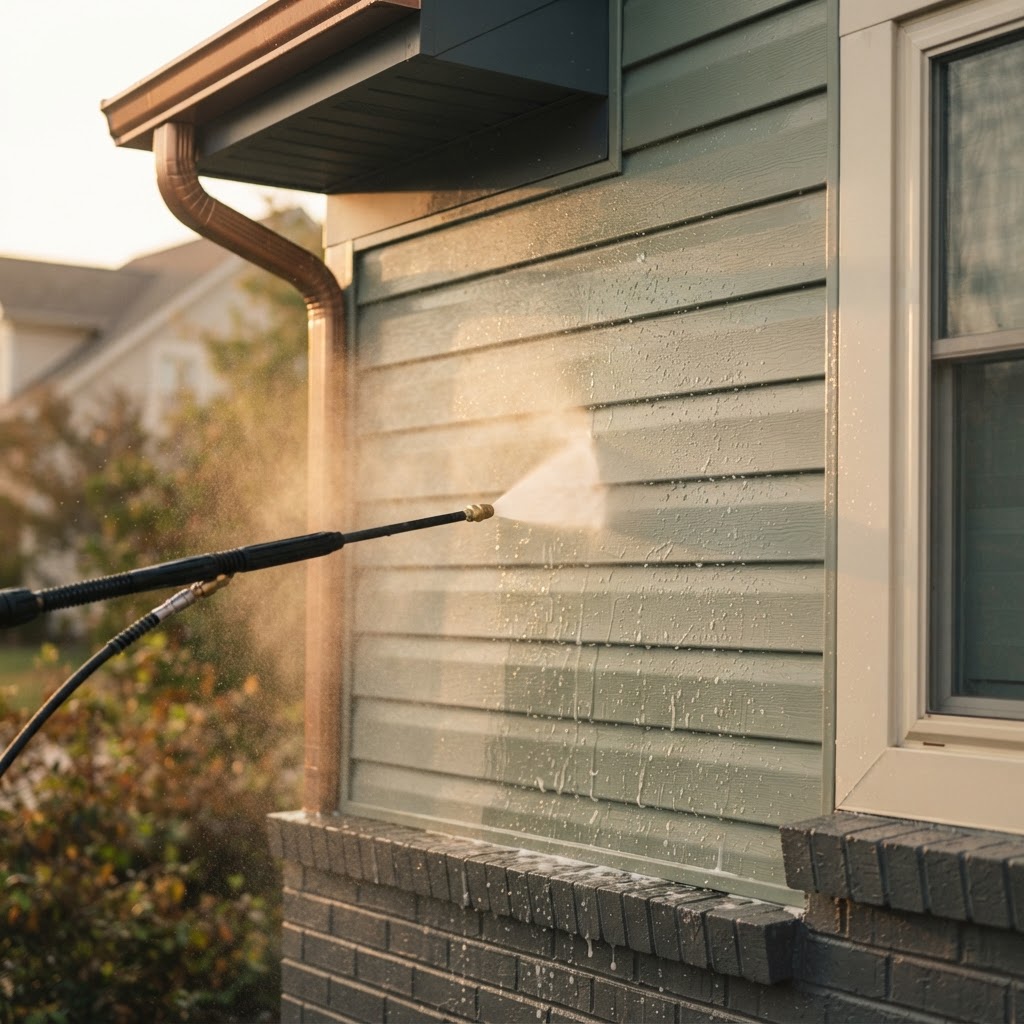
Using a commercial surface cleaner attachment (not a wand), we pressure washed the entire driveway at 3,000 PSI. The surface cleaner provides even, overlapping passes that eliminate the zebra-stripe pattern common with wand cleaning. The dead algae lifted away in sheets, revealing the original concrete color underneath.
Step 3: Post-Treatment and Sealing
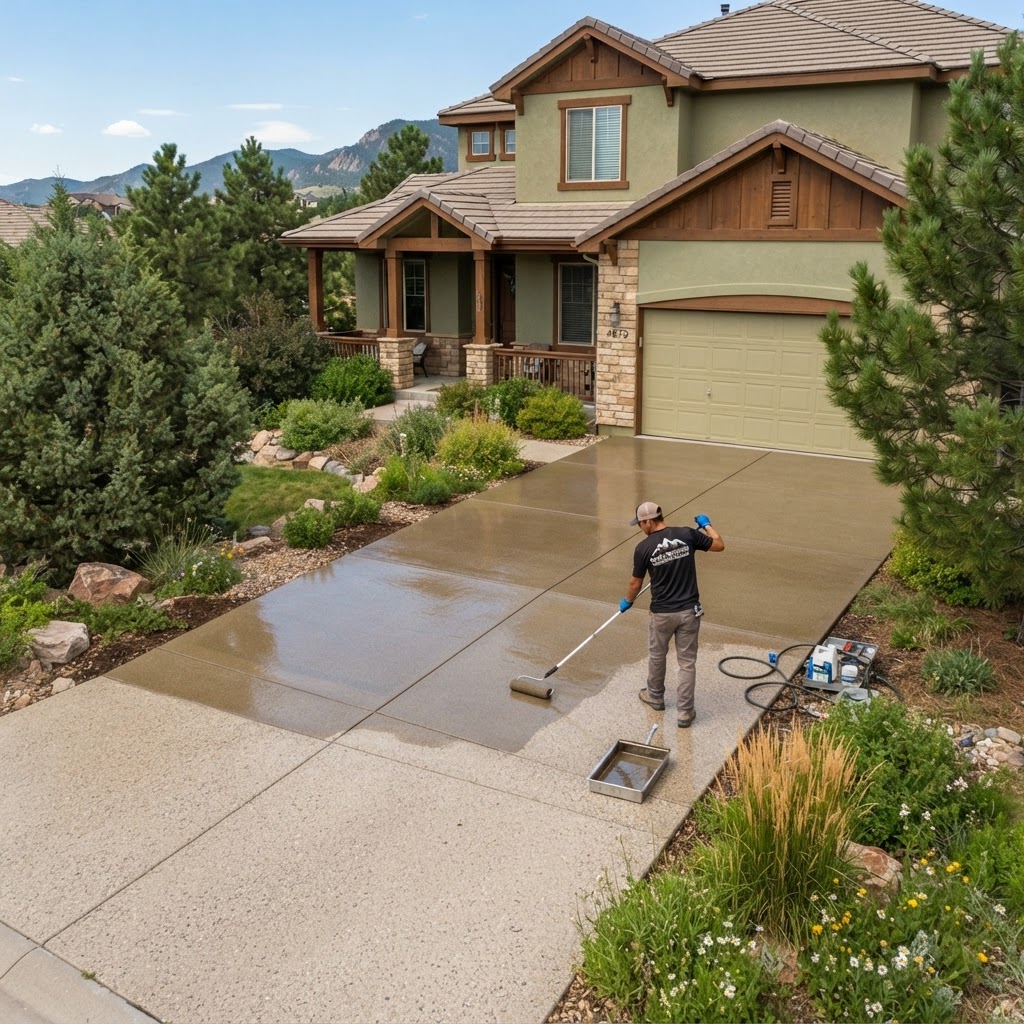
After the surface dried, we applied a second light treatment to kill any remaining spores, then applied a penetrating concrete sealer. The sealer fills the microscopic pores that algae had colonized, making it significantly harder for biological growth to return.
The Result: A Driveway Reborn
The transformation was immediate and dramatic. Where dark patches had covered 60% of the surface, the concrete was now a consistent, clean light gray. The homeowner — who had been preparing to spend $5,000+ on driveway replacement — stood in the driveway running their hand across the clean surface in disbelief.
What had looked like permanent damage was simply years of biological growth that no household cleaner could address. The entire restoration took under three hours and cost less than 10% of a replacement.
Homeowner Tip
Before assuming stained concrete needs replacement, have it professionally assessed. In our experience, over 80% of "permanently stained" driveways are actually biological growth that can be fully removed with the right cleaning approach.
Why DIY Cleaning Failed
The homeowner had tried everything available at the hardware store. Here's why those methods didn't work:
- Household bleach: Kills surface algae but doesn't penetrate concrete pores where roots live
- Rental pressure washers: Typically 2,000 PSI with wand-only attachments — not enough power or coverage for embedded growth
- No pre-treatment: Pressure washing alone removes surface growth but leaves spores behind to regrow within months
- No sealer: Without sealing the cleaned pores, algae returns to the same conditions that caused it
Preventing Algae From Returning
After cleaning, we recommended three preventive measures:
- Adjust sprinkler heads to eliminate overspray onto the driveway — the primary moisture source
- Trim tree branches to increase sunlight on the driveway surface
- Re-seal every 2–3 years to maintain the protective barrier in the concrete pores
Frequently Asked Questions
Below are the most common questions Westminster homeowners ask about concrete staining and cleaning.
See the FAQ section below for detailed answers on causes, frequency, cost, and restoration.
Think Your Driveway Needs Replacing? Get a Second Opinion
If your concrete looks permanently stained, there's a good chance it's biological growth that can be removed. Request a free assessment or learn more about our concrete cleaning service — we'll tell you honestly whether your surface can be restored or truly needs replacement.