The Homeowner Who Wanted Pressure Washing
A homeowner in Westminster called requesting pressure washing for their vinyl siding. Green and black streaks had spread across the north and east walls after a particularly wet spring, and they'd seen pressure washing advertised as the solution.
We understood the instinct — "pressure washing" is the term most homeowners use for exterior cleaning. But pressure washing vinyl siding is one of the most damaging things you can do to a home exterior. We took the time to explain why soft washing was the right choice, and the results spoke for themselves.
Quick Summary
A Colorado homeowner requested pressure washing for algae-streaked vinyl siding. We recommended soft washing instead — low-pressure water with specialized cleaning solutions that kill organic growth at the root without risking water intrusion, cracked panels, or surface damage. The siding was fully restored, and results will last 2–3 years.
The Problem: Algae on Vinyl Siding
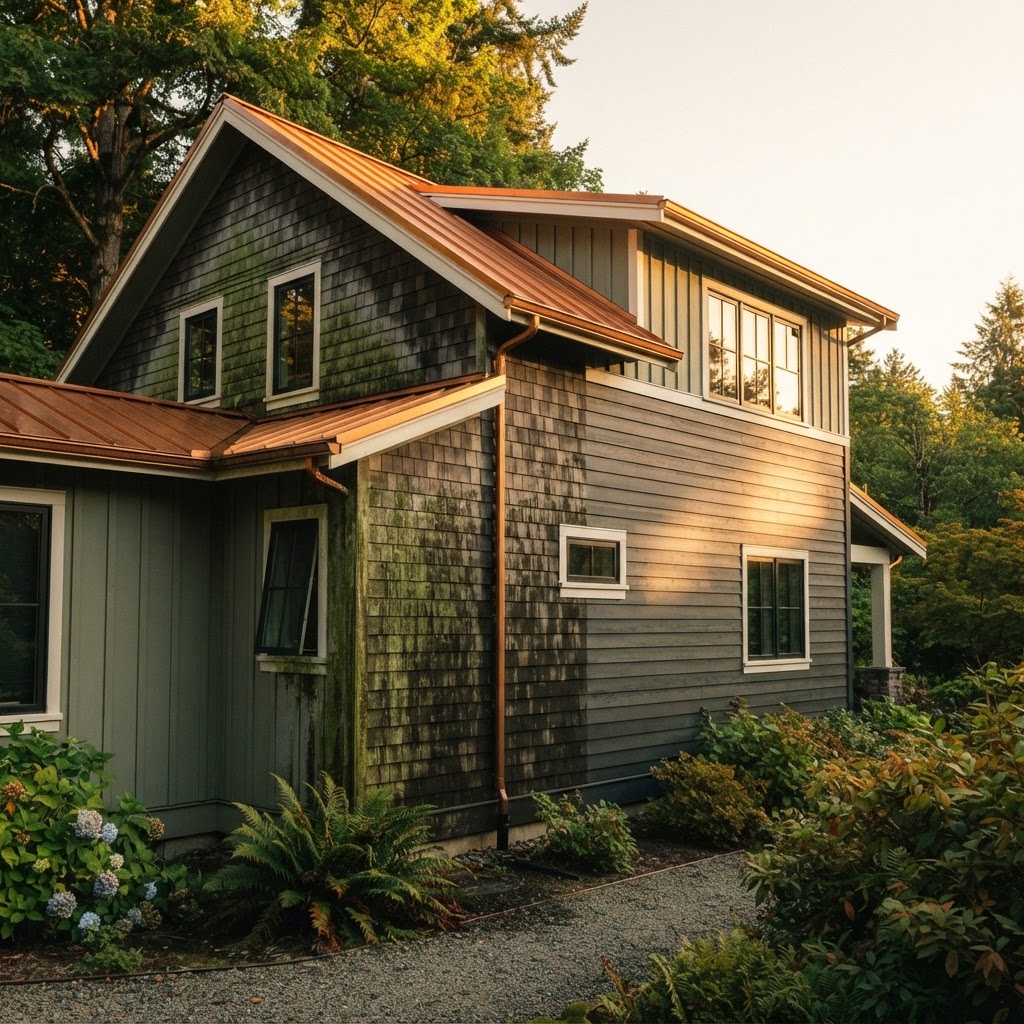
The homeowner's siding had classic Littleton algae growth — green streaks on the north-facing wall and black patches near the ground where moisture collected. This is extremely common in Littleton and Arvada, especially on homes with mature landscaping or north-facing exposures that receive limited direct sunlight.
The algae wasn't just cosmetic. Left untreated, it holds moisture against the siding, which can lead to premature fading, panel degradation, and in severe cases, water intrusion behind the siding where it causes wood rot in the sheathing underneath.
Why Pressure Washing Vinyl Siding Is Dangerous
The homeowner was surprised to learn that pressure washing — the service they'd called to request — was the wrong approach for their siding. Here's why:
Water Intrusion Behind Siding
Vinyl siding is designed as a rain screen — water is meant to run down the face of the panels and exit at the bottom. Pressure washing at 2,000+ PSI forces water UP and BEHIND the panels, past the house wrap and into the wall cavity. Once inside, that water has no way out and causes mold, rot, and structural damage.
Cracked and Damaged Panels
Vinyl siding becomes brittle in Colorado's cold weather and under UV exposure. High-pressure water can crack panels, especially at seams and nail slots. Once cracked, a panel must be replaced — and matching older faded vinyl is nearly impossible.
Stripped Oxidation Layer
All vinyl siding develops a thin oxidation layer over time — a chalky film that's actually part of the panel's weathering process. Pressure washing strips this layer unevenly, creating visible "clean streaks" and blotchy patches that are more noticeable than the original algae.
Window and Seal Damage
High-pressure water can blow out window seals, force water under door frames, and damage caulking around penetrations. The repair costs from these issues far exceed the cost of professional soft washing.
Warning
Never pressure wash vinyl, stucco, wood, or painted siding. The risk of water intrusion and surface damage is significant. Always use soft washing for these materials.
The Solution: Professional Soft Washing
We explained the soft washing process and the homeowner agreed. Here's how the service works:
Step 1: Property Protection
We covered all plants, electrical outlets, and AC units near the work area. While our cleaning solutions are biodegradable, we take no chances with landscaping — especially in Littleton and Centennial where landscaping investments can be significant.
Step 2: Solution Application
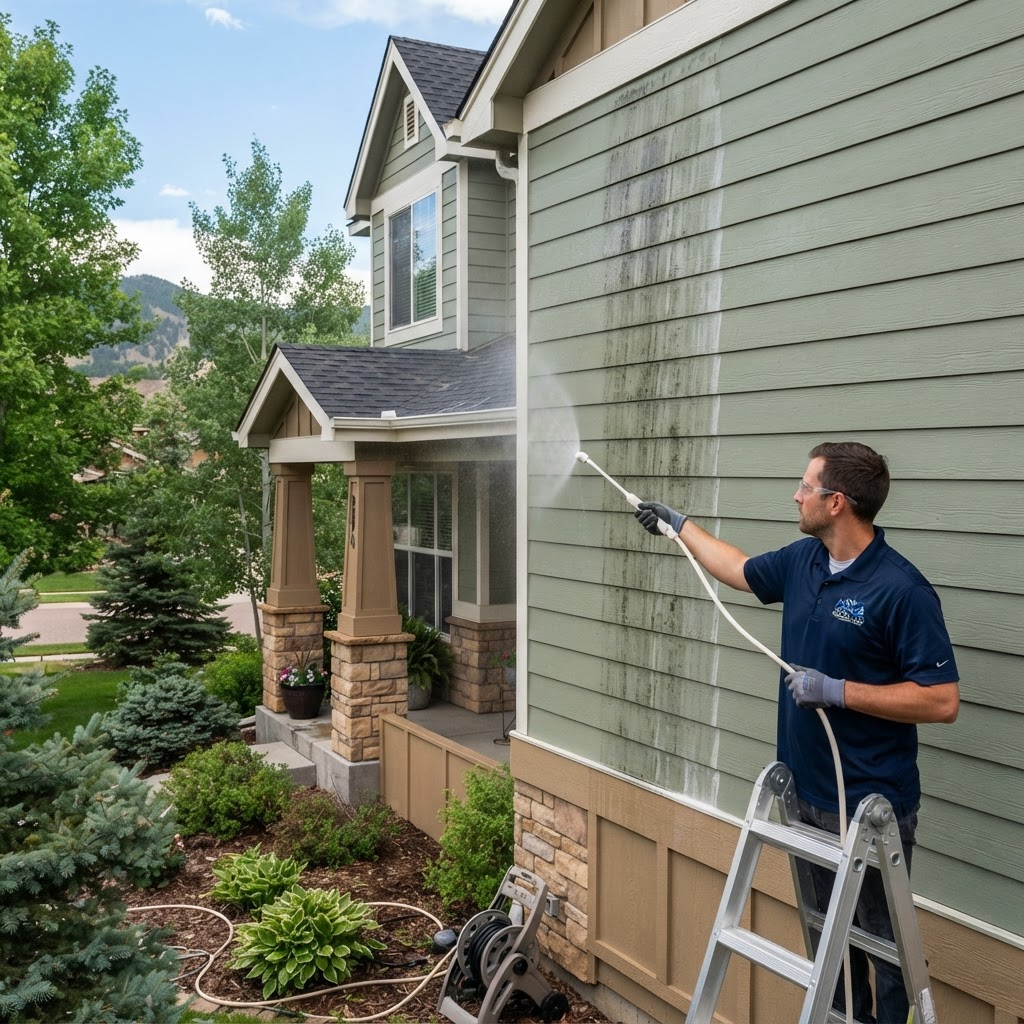
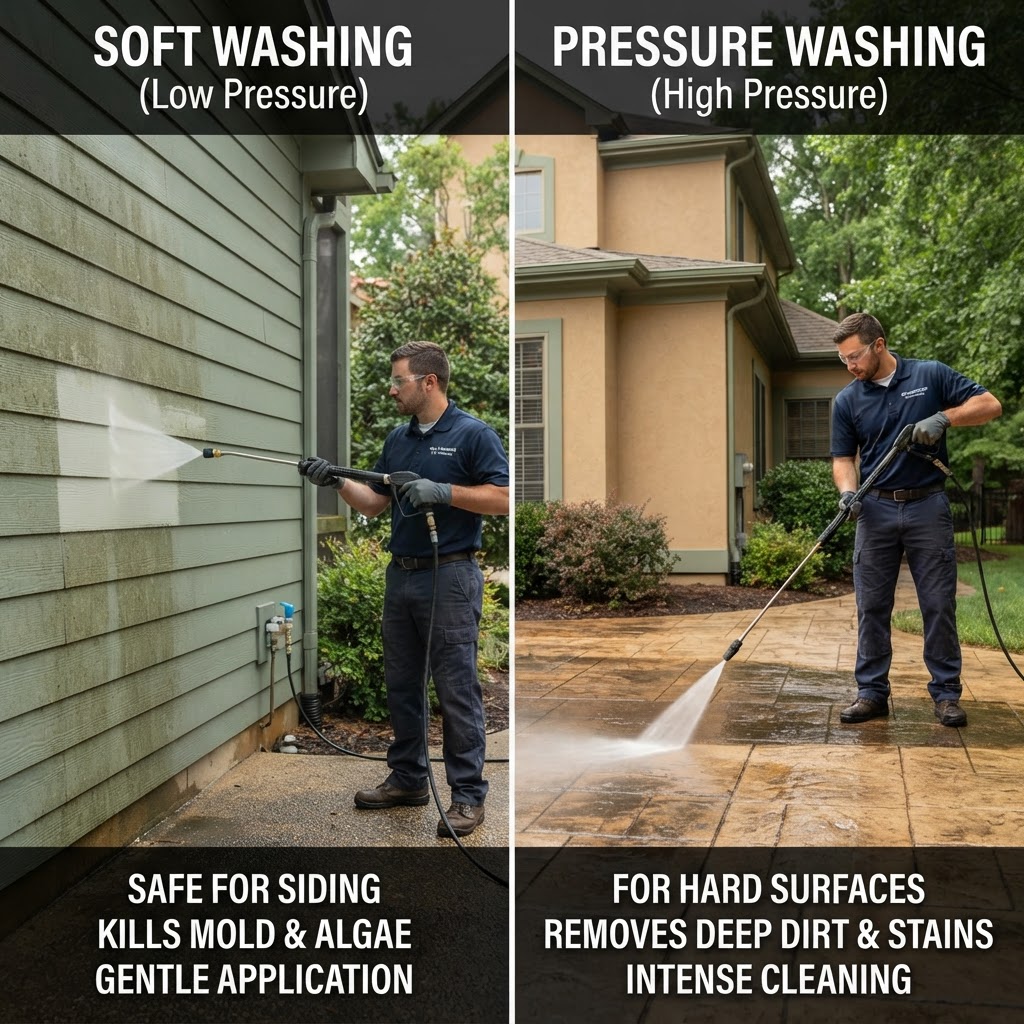
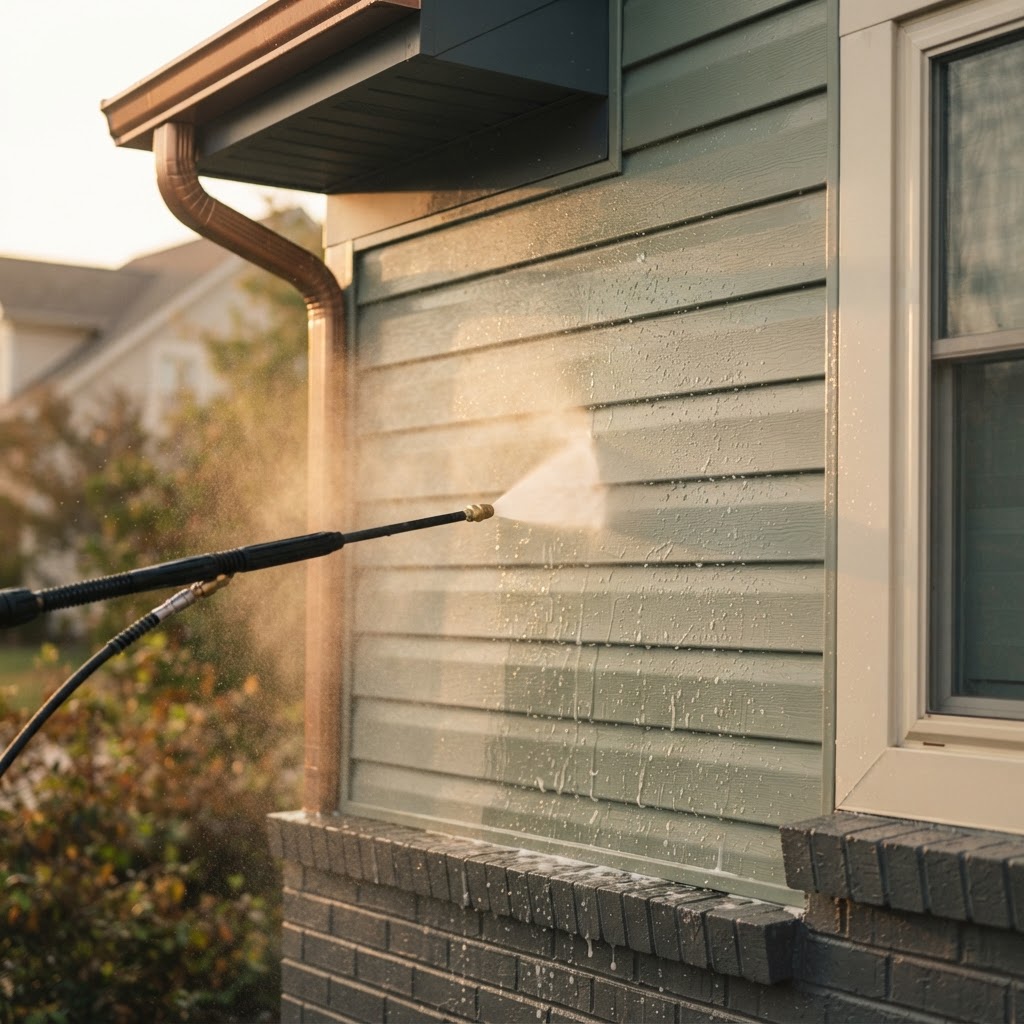
We applied a proprietary soft wash solution using a low-pressure pump system — think of it as a garden hose spray, not a pressure washer. The solution contains specialized surfactants and algaecides that penetrate the siding pores and kill algae, mold, and mildew at the root.
Step 3: Dwell Time
The solution needs 10–15 minutes to fully kill organic growth. During this time, the algaecide breaks down the cell walls of the organisms, and the surfactant lifts dirt and grime from the siding surface. This is the step that makes soft washing superior — it cleans at the molecular level, not just the surface.
Step 4: Low-Pressure Rinse
We rinsed the siding with low-pressure water — under 500 PSI. The dead algae, mold, and lifted dirt washed away cleanly, revealing the original siding color underneath. No streaks, no blotchy patches, no water intrusion.
The Result: Clean Siding Without Damage
The transformation was immediate. Green and black streaks that had covered the north and east walls were completely gone. The siding color was consistent and bright — no oxidation streaks, no panel damage, no water behind the walls.
Because soft washing kills algae at the root (rather than just blasting it off the surface like pressure washing), the homeowner can expect 2–3 years before any regrowth appears — significantly longer than the 6–12 months typical after pressure washing.
Homeowner Tip
If a contractor offers to "pressure wash" your siding, ask if they use soft washing instead. Reputable exterior cleaning professionals soft wash siding — they never pressure wash it. If they insist on pressure washing, find another provider.
Soft Washing vs. Pressure Washing: When to Use Each
| Surface | Soft Wash | Pressure Wash |
|---|---|---|
| Vinyl siding | ✓ Yes | ✗ Never |
| Stucco | ✓ Yes | ✗ Never |
| Brick (painted) | ✓ Yes | ✗ Never |
| Wood siding | ✓ Yes | ✗ Never |
| Roof shingles | ✓ Yes | ✗ Never |
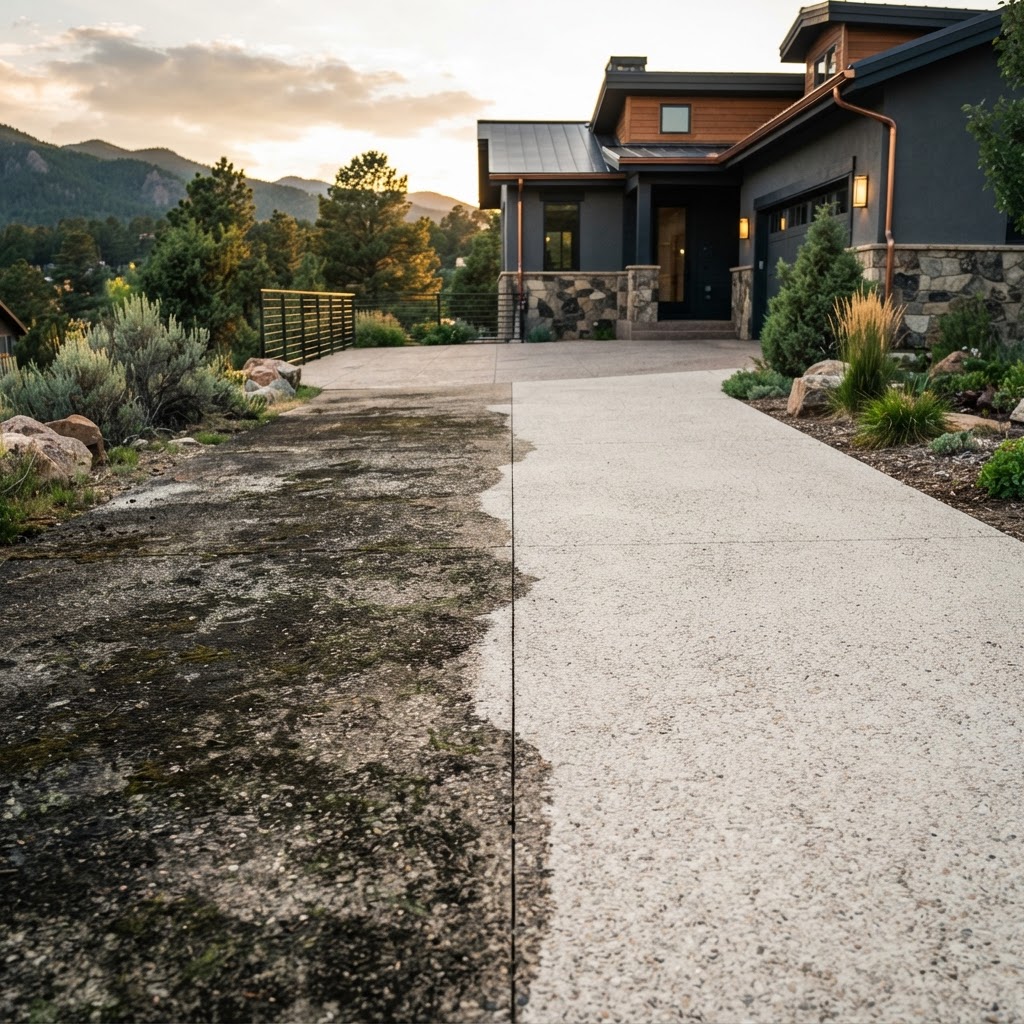
| Concrete driveways | Optional | ✓ Yes |
| Paver patios | Optional | ✓ Yes (low pressure) |
| Fences (wood) | ✓ Yes | ✓ Yes (low pressure) |
Frequently Asked Questions
Below are the most common questions Littleton homeowners ask about soft washing vs. pressure washing.
See the FAQ section below for detailed answers on methods, safety, frequency, and siding materials.
Need Your Siding Cleaned Safely?
Drift Exteriors uses professional soft washing for all siding materials — vinyl, stucco, brick, wood, and Hardie board. Request a free quote or learn more about our house washing service to safely restore your home's exterior.