When to Restore vs. Replace Your Fence
A weathered fence does not always need to be replaced. In many cases, years of dirt, ultraviolet exposure, moisture, algae, and old stain can make structurally sound wood look far worse than it actually is.
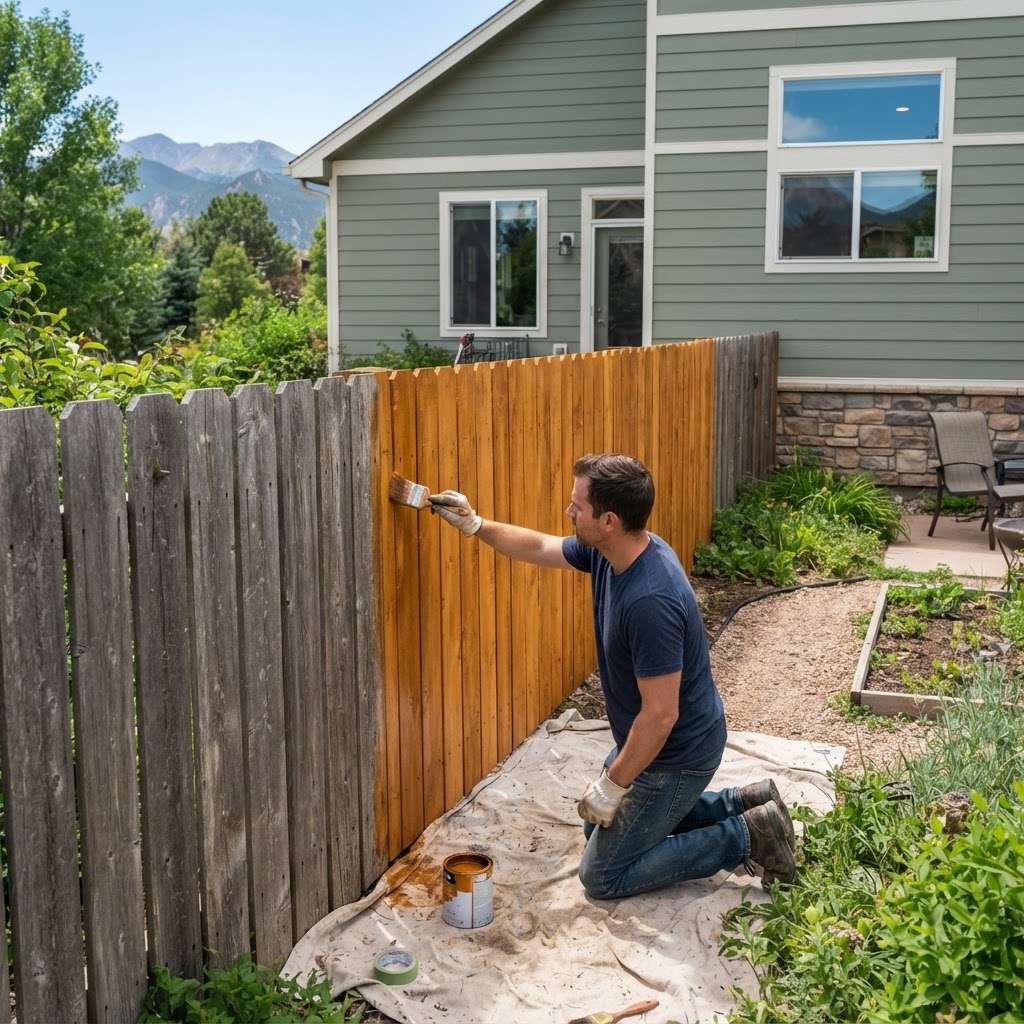
Fence restoration focuses on cleaning, repairing, brightening, and protecting the existing wood. Replacement involves removing damaged sections or rebuilding the entire fence when the structure has reached the end of its useful life.
The right decision depends less on appearance alone and more on the condition of the posts, rails, pickets, fasteners, and wood fibers.
Quick Summary
In this guide, you’ll learn:
- Which fence problems are mostly cosmetic
- Which signs indicate structural failure
- When cleaning and staining may extend a fence’s life
- When individual boards can be repaired
- When full replacement is the safer investment
- How Thornton weather affects wood fencing
Start With Structure, Not Appearance
A gray, faded, or heavily stained fence may still have years of useful life remaining. Wood naturally changes color as it is exposed to sunlight and weather. Surface discoloration does not automatically mean the boards are rotten or unsafe.
Before deciding to replace a fence, inspect the structural components:
- Posts should remain firm in the ground
- Rails should not sag or separate
- Pickets should remain securely attached
- Gates should open and close without severe binding
- Fasteners should not be heavily corroded or pulling through the wood
- Boards should not crumble when pressed or probed
A fence with sound posts and rails is often a strong candidate for restoration, even when the surface looks severely weathered.
Signs Your Fence May Be Restorable
Restoration may be appropriate when the fence has cosmetic wear but remains structurally stable.
Common signs include:
- Gray or silver wood
- Uneven coloration
- Dirt and dust buildup
- Green algae or mildew
- Peeling or faded stain
- Minor surface cracking
- A small number of loose pickets
- Light warping
- Isolated damaged boards
- A generally solid frame
These conditions often improve significantly through professional cleaning, minor repairs, wood brightening, and the application of a new protective stain.
What Fence Restoration Usually Includes
A complete fence restoration may involve several steps.
Inspection
The fence is evaluated for rot, loose boards, damaged rails, unstable posts, failing fasteners, and previous coatings.
Cleaning
Dirt, algae, mildew, failed stain, and weathered surface fibers are removed using methods appropriate for the wood.
Repairs
Loose pickets, damaged boards, protruding nails, or failing screws may be repaired or replaced where practical.
Brightening
A wood-brightening treatment may be used to neutralize the cleaning process and restore a more natural wood tone.
Drying
The fence must dry adequately before stain or sealer is applied.
Protection
A penetrating exterior wood stain helps reduce moisture absorption and ultraviolet damage while improving appearance.
Restoration does not make old wood brand new, but it can dramatically improve a structurally sound fence and extend its service life.
Northglenn’s Climate Can Shorten a Fence’s Lifespan
Louisville and Arvada present unique challenges for wood fencing. High elevation means stronger ultraviolet (UV) exposure, which dries out wood fibers faster than in many other parts of the country. Rapid temperature swings, snow, spring moisture, hail, and dry summer conditions all contribute to expansion, contraction, cracking, and fading.
Homes in Louisville and Broomfield may also experience:
- Intense UV exposure
- Heavy snow accumulation against fence lines
- Wind-driven dust
- Irrigation overspray
- Sprinkler damage near posts
- Cottonwood debris
- Tree sap
- Algae in shaded areas
- Freeze-thaw cycles
Routine maintenance helps minimize these effects before they become expensive repairs.
Signs Your Fence Should Probably Be Replaced
Not every fence can be saved. Once structural components begin failing, replacement often becomes the safer and more cost-effective option.
Common indicators include:
- Multiple rotted or unstable posts
- Rails separating from posts
- Extensive insect damage
- Large areas of soft or decaying wood
- Numerous broken pickets across the fence
- Significant leaning that cannot be corrected
- Widespread warping throughout the structure
- Repeated repairs over several years
- Fence nearing or exceeding its expected lifespan with extensive deterioration
If the posts have failed, restoration alone usually will not solve the underlying problem.
Spot Repairs vs. Full Replacement
Many homeowners assume one damaged section means the entire fence must be replaced. Often, that’s not the case.
If only a few boards or one section has been damaged by weather, impact, or age, replacing individual components may restore both appearance and structural integrity.
Examples include:
- Replacing several cracked pickets
- Installing a new gate
- Repairing one damaged rail
- Replacing isolated post caps
- Repairing hardware and hinges
Targeted repairs followed by professional restoration can often provide excellent results while costing far less than replacing the entire fence.
Is Fence Restoration Worth It?
For many homeowners, yes.
If the fence remains structurally sound, restoration is usually one of the most cost-effective exterior improvements available. Cleaning removes years of buildup, while fresh stain protects the wood from moisture and UV exposure.
Benefits include:
- Improved curb appeal
- Extended fence lifespan
- Lower long-term maintenance costs
- Better protection against weather
- Increased property value
- Delayed replacement expenses
- More uniform appearance across the property
Many fences that appear ready for demolition can gain several additional years of service through proper restoration and ongoing maintenance.
How Long Does Fence Restoration Last?
The lifespan of a restored fence depends on the type of wood, the quality of the stain, weather exposure, and ongoing maintenance. In Louisville, most professionally restored fences benefit from cleaning and a maintenance coat every 2–4 years, though south-facing fences exposed to intense sunlight may require attention sooner.
Homeowners can extend the life of their fence by:
- Keeping vegetation away from the fence line
- Avoiding constant sprinkler spray on the wood
- Washing off dirt and pollen periodically
- Inspecting for loose boards each season
- Addressing minor repairs before they worsen
Routine maintenance is almost always less expensive than replacing an entire fence.
Common Mistakes Homeowners Make
Fence replacement is a major investment, so it’s worth avoiding these common mistakes:
- Assuming gray wood means the fence is rotten
- Painting over dirt, mildew, or failing stain
- Waiting until posts begin failing before taking action
- Using excessive pressure that damages wood fibers
- Ignoring small repairs for multiple seasons
- Choosing replacement without first evaluating restoration options
A professional inspection often reveals that a fence has significantly more life remaining than its appearance suggests.
Professional Restoration vs. DIY
Many homeowners choose to restore their own fences, and for smaller projects that can work well. However, larger fences often require specialized equipment, proper cleaning chemistry, and experience to avoid damaging the wood.
Professional restoration typically offers:
- More consistent cleaning
- Proper wood-safe cleaning solutions
- Even stain application
- Faster completion
- Better long-term protection
- Identification of structural issues before they become expensive repairs
The goal isn’t simply making the fence look better—it’s protecting the investment for years to come.
Final Thoughts
Replacing a fence should usually be the last option, not the first. Many weathered fences only need professional cleaning, a few repairs, and a quality stain to restore both their appearance and durability.
If your fence still has solid posts and a stable framework, restoration may save thousands of dollars while adding years to its lifespan. A professional evaluation can help determine whether restoration, targeted repairs, or replacement is the best long-term investment for your property.