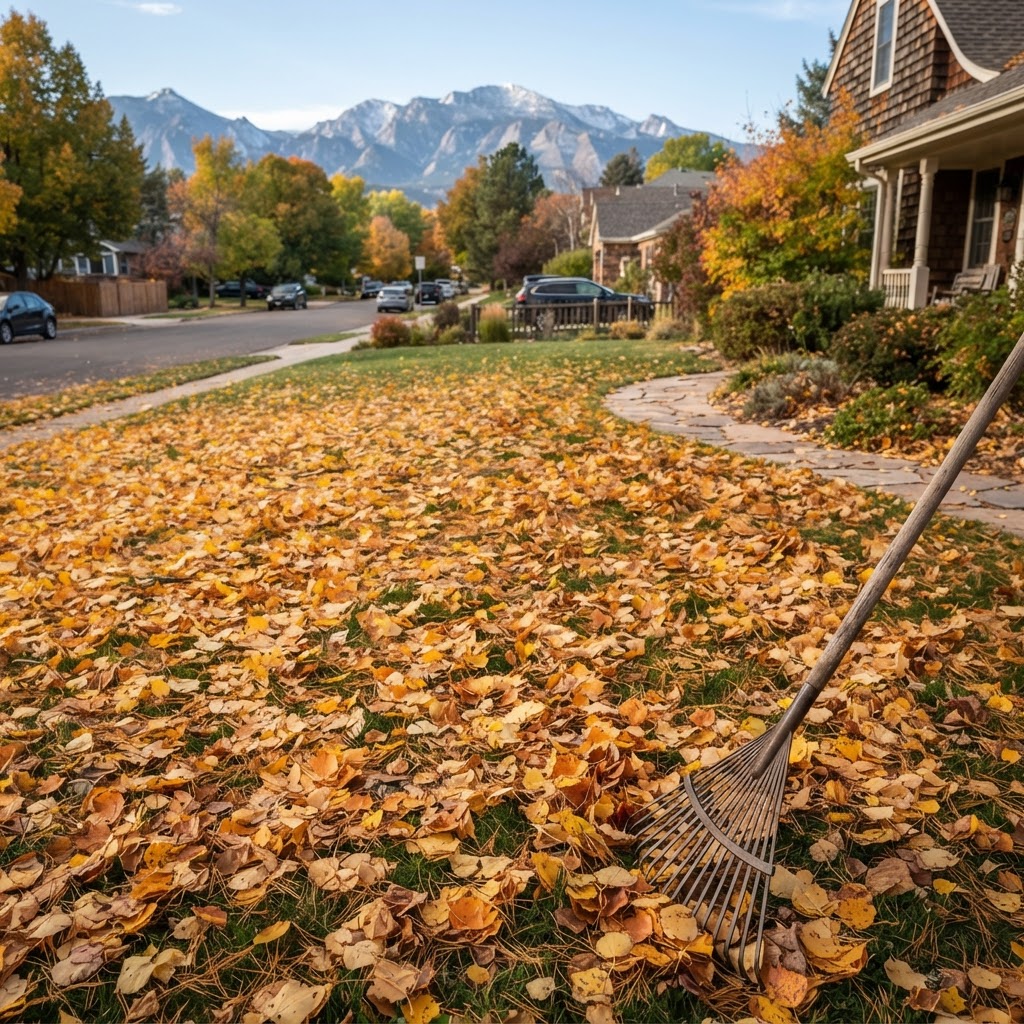
In most of the country, fall cleanup is a whenever-you-get-to-it chore. In Colorado, it's a deadline. Once the first snow lands and stays, a leaf-covered lawn stops being untidy and starts being a problem — the leaves freeze into a mat that blocks sunlight and air from the turf underneath until spring.
Why leaves left under snow damage your lawn
A thick layer of leaves under snow does the same thing a tarp would: it seals moisture against the grass, blocks sunlight, and traps heat. The result is a matted, gray-green or bare patch by April — a condition turf pros call snow mold. It's one of the most common preventable lawn problems we see in Denver-area yards each spring, and the fix is simply not letting leaves overwinter on the grass.
Colorado factor
Our leaf drop is compressed. Unlike the Midwest, where leaves fall over 6–8 weeks, Colorado's hard freeze often strips trees in days — meaning a lawn that looked fine one weekend can be buried the next.
The Colorado leaf drop calendar
We time fall cleanups around three windows:
- Early October — first light cleanup, mostly early-droppers like cottonwoods and green ash.
- Early November — the heavy drop, when maples, aspen, and elms let go. This is the big one.
- After the final drop — a final clearing pass once the last leaves (and your neighbor's last leaves) are down, and before the first sticking snow.
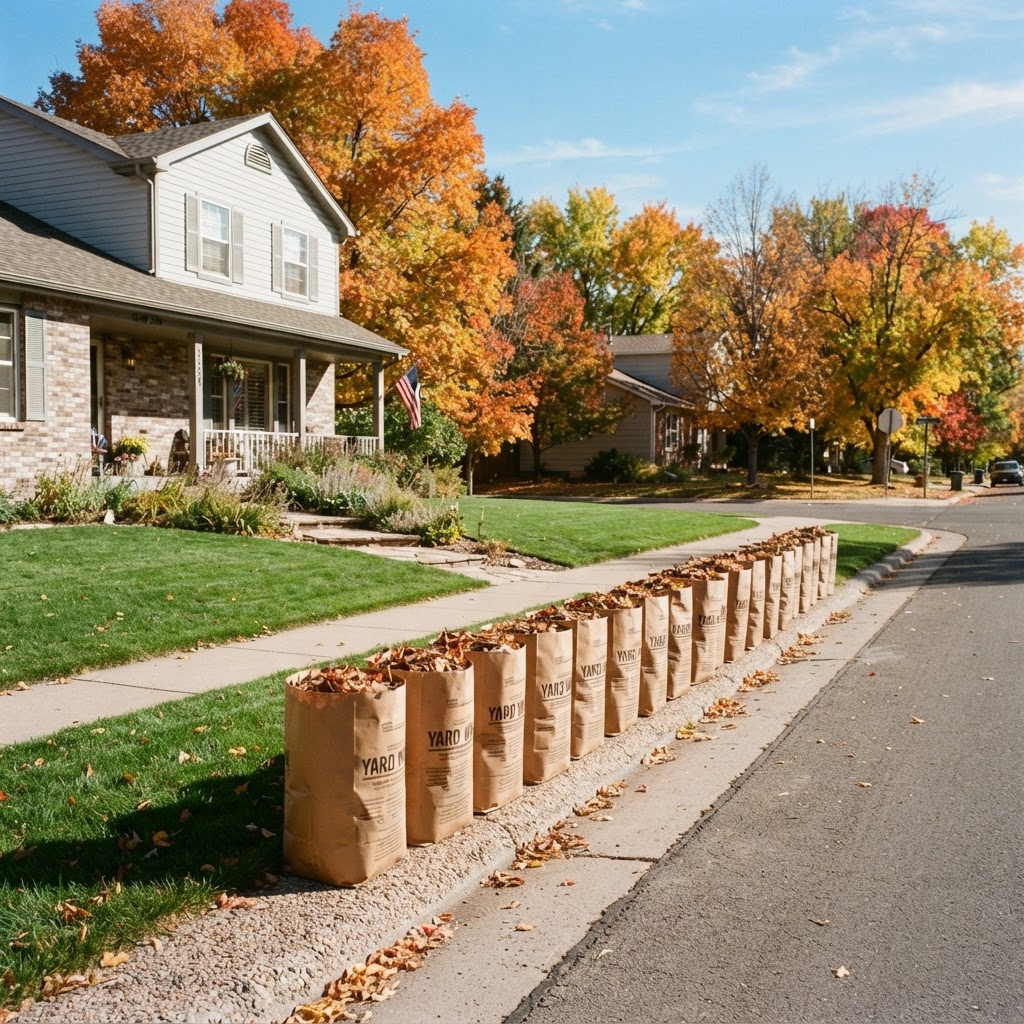
Homeowners who book a single visit usually land in late October or early November. If your yard has heavy tree cover, two or three passes keep the workload — and the price — of each visit down, which is exactly why season-pass pricing exists.
Don't forget pine needles
Pine needles are the other half of a Colorado fall. They don't smother grass the same way leaves do, but they acidify beds over time, carpet rock and mulch, and clog gutter runs and downspout areas just as effectively as leaves. If your property has mature pines, plan the cleanup around needles as much as leaves.
What happens if you wait until spring
Wet, compacted leaves that sat under snow all winter are heavier, slimier, and harder to clear — and the grass underneath has already spent months suffocating. Spring cleanup is doable, but you're paying to repair damage instead of prevent it. Clearing before the first snow is the cheapest version of this job you'll ever buy.
Pro tip
Watch the forecast, not the calendar. In the Denver Metro area, the first sticking snow can arrive anywhere from mid-October to late November. The goal is simple: clear ground before the first snow that stays.