Fence Cleaning vs Fence Staining
Cleaning restores appearance. Staining protects against Colorado's intense UV. Both matter, but one is essential.
Fence cleaning and fence staining are related but serve different purposes. Cleaning removes dirt, mold, mildew, and environmental staining to restore appearance. Staining applies a protective coating that seals the wood, protects against UV damage, and prevents moisture penetration. In Colorado's intense high-altitude UV, staining after cleaning is essential for wood fence longevity.
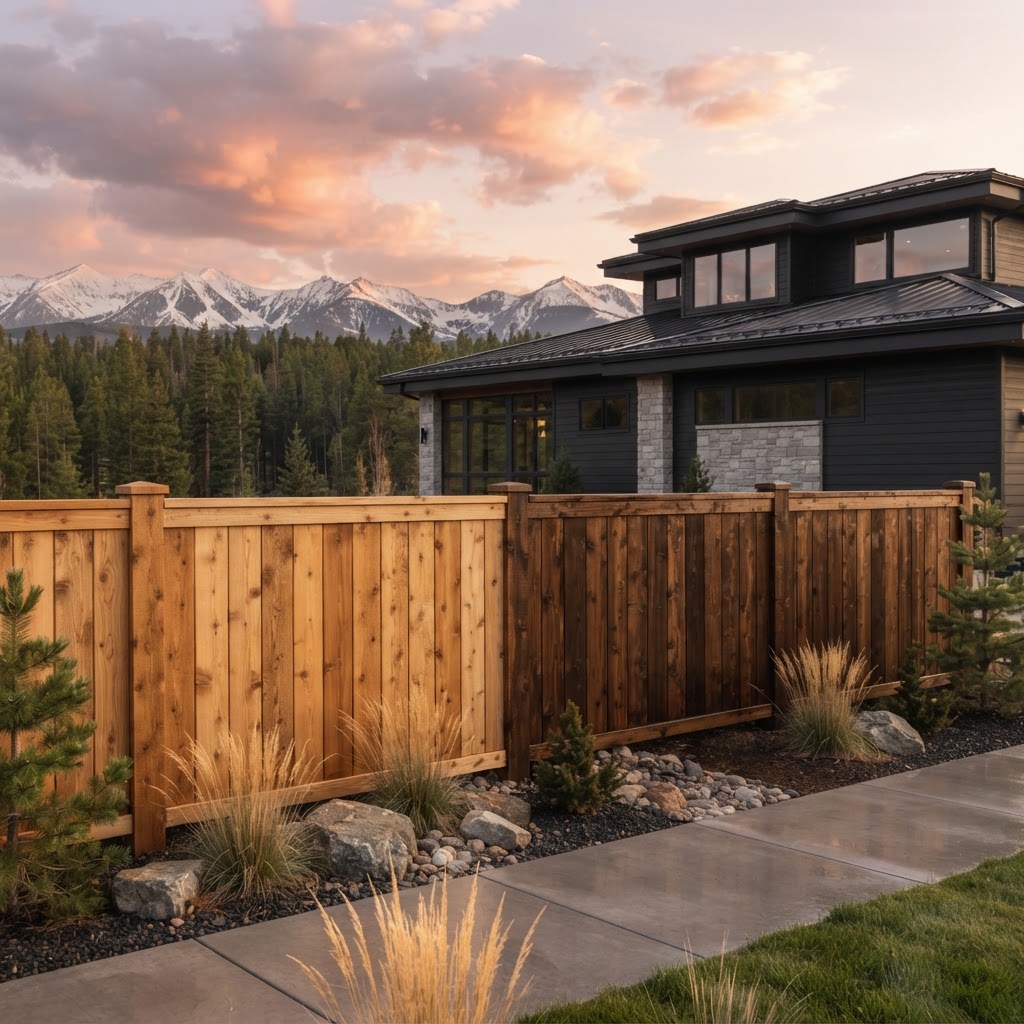
Fence Cleaning vs Fence Staining at a Glance
| Feature | Fence Cleaning | Fence Staining |
|---|---|---|
| Best For | Removing dirt, mold, and organic growth | Protecting against UV, moisture, and decay |
| Average Cost | $200-$500 | $600-$1,500 (cleaning + staining) |
| Time Required | 2-4 hours | 4-8 hours (including drying time) |
| Longevity | 1 year before dirt returns | 2-4 years of protection |
| Risk Level | Low—standard cleaning | Low—standard application |
| Maintenance | Annual cleaning recommended | Re-stain every 2-4 years |
| DIY Friendly | Possible with basic equipment | Possible but requires proper preparation |
| Our Recommendation | In Colorado, do both. Clean first to remove dirt and organic growth, then stain to protect against UV damage. Staining is the more important investment—without it, Colorado's intense sun will gray and crack wood fences within 1-2 years. Re-stain every 2-4 years. | |
What Each Option Is
Fence Cleaning
Fence cleaning uses soft washing or pressure washing to remove dirt, mold, mildew, algae, and environmental staining from fence surfaces. It restores appearance and is the essential first step before staining. Cleaning alone provides temporary improvement but doesn't protect against UV damage or moisture penetration.
Fence Staining
Fence staining applies a protective coating—clear, semi-transparent, or solid—to clean, dry wood. The stain seals the wood, protects against UV damage, prevents moisture penetration, and inhibits organic growth. In Colorado's intense high-altitude UV, staining is essential for wood fence longevity.
Advantages & Disadvantages
Fence Cleaning
Pros
- Restores appearance immediately
- Removes organic growth and staining
- Lower cost than staining
- Essential preparation before staining
- Fast—completed in a few hours
Cons
- Doesn't protect against UV damage
- Results are temporary—dirt and growth return
- Won't prevent wood graying and cracking
- Doesn't extend fence lifespan
Fence Staining
Pros
- Protects against UV damage and graying
- Prevents moisture penetration and rot
- Extends fence lifespan significantly
- Maintains wood color and appearance
- Inhibits mold, mildew, and algae growth
Cons
- Higher cost than cleaning alone
- Requires cleaning first (additional cost)
- Takes longer to complete
- Needs reapplication every 2-4 years
How Much Does Each Option Cost?
Fence Cleaning
$200-$500
Fence Staining
$600-$1,500 (cleaning + staining)
Fence cleaning costs $200-500 depending on fence length. Fence staining costs $400-1,000 additional. Cleaning alone restores appearance temporarily but doesn't protect against UV damage. Staining protects against UV, moisture, and organic growth. For wood fences in Colorado's intense sun, staining after cleaning is essential to prevent premature aging.
Pricing varies by property size, condition, and location. These are educational estimates only—not formal quotes.
Head-to-Head Performance
| Metric | Fence Cleaning | Fence Staining |
|---|---|---|
| Effectiveness | Excellent for removing dirt and growth | Excellent for protecting against UV and moisture |
| Longevity | 1 year before dirt returns | 2-4 years of protection |
| Safety | Low risk—standard cleaning | Low risk—standard application |
| Environmental Impact | Biodegradable cleaning solutions | Stain products—follow manufacturer guidelines |
| Appearance | Restores original appearance temporarily | Maintains appearance long-term |
| Maintenance | Annual cleaning recommended | Re-stain every 2-4 years |
Best Choice For Your Situation
Common Misconceptions
Cleaning is enough to protect a wood fence.
Cleaning removes dirt and organic growth but doesn't protect against UV. In Colorado's intense sun, unstained wood will gray, crack, and deteriorate within 1-2 years.
You can stain a dirty fence.
Stain won't penetrate or bond properly on dirty wood. The fence must be thoroughly cleaned and dried before staining. Otherwise, stain traps contaminants and fails prematurely.
Pressure treated wood doesn't need staining.
Pressure treating protects against rot and insects but not UV damage. Even pressure treated wood needs staining to prevent graying, cracking, and surface deterioration from sun exposure.
Frequently Asked Questions
Get Colorado Homeowner Tips Straight to Your Inbox
Join other Colorado homeowners receiving seasonal maintenance reminders, cost-saving tips, and exclusive offers from Drift Exteriors. No spam — just helpful content.
Still Not Sure Which Option Is Right for Your Home?
Request a free property assessment and we'll recommend the safest and most effective solution for your specific exterior surfaces.