Oil-Based Fence Stain vs Water-Based Fence Stain
Oil-based is traditional and penetrates deeply. Water-based is modern, cleaner, and lasts longer in Colorado's UV.
Oil-based and water-based fence stains are the two primary options for protecting wood fences. Oil-based stains have been the traditional choice for decades—they penetrate deeply and provide rich color. Water-based stains are a modern alternative that dries faster, is more environmentally friendly, and often lasts longer. Understanding the differences helps you choose the right stain for your fence.
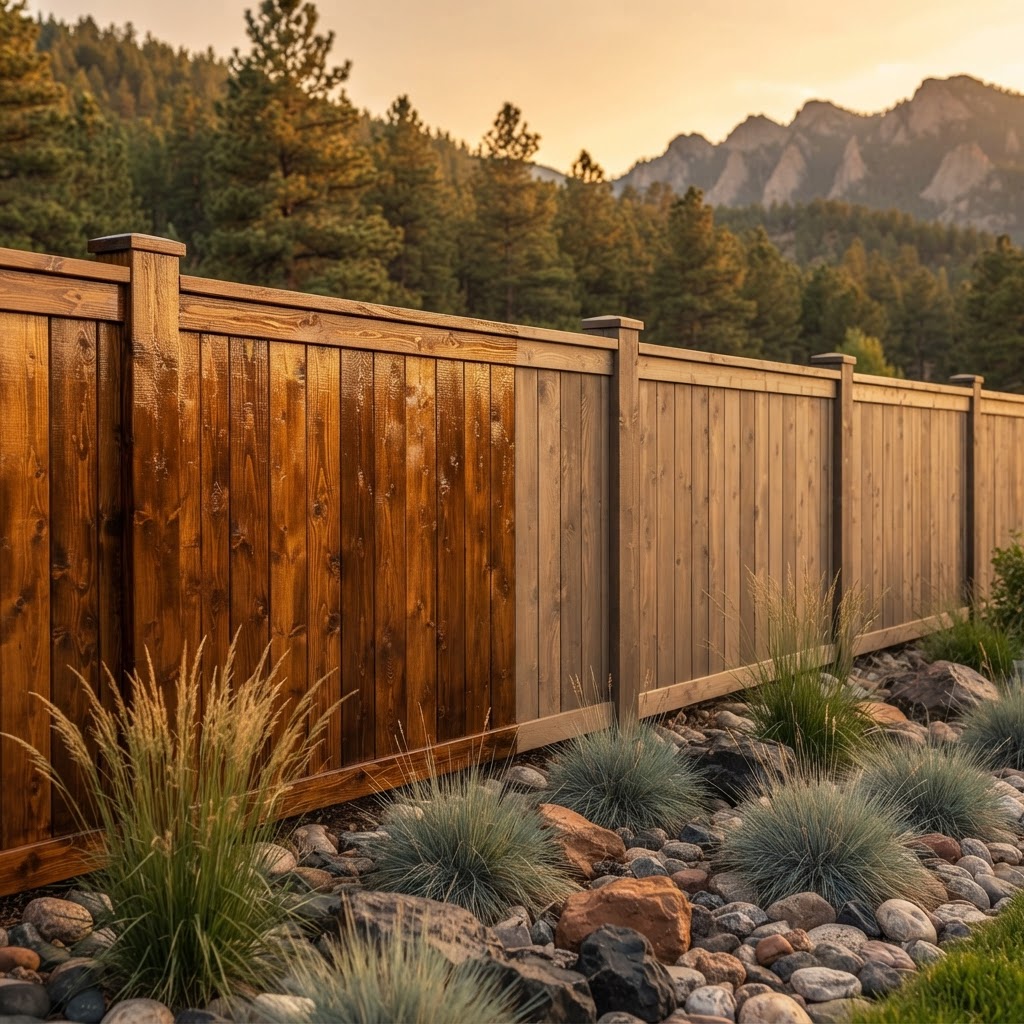
Oil-Based Fence Stain vs Water-Based Fence Stain at a Glance
| Feature | Oil-Based Fence Stain | Water-Based Fence Stain |
|---|---|---|
| Best For | Old, dry wood; traditional appearance | Colorado UV resistance; environmental concerns |
| Average Cost | $400-$1,000 (including application) | $400-$1,000 (including application) |
| Time Required | Longer drying time between coats | Fast drying—multiple coats in one day |
| Longevity | 2-3 years before re-staining | 3-4 years before re-staining |
| Risk Level | Higher VOC—use ventilation | Low VOC, low odor |
| Maintenance | Re-stain every 2-3 years | Re-stain every 3-4 years |
| DIY Friendly | Possible but requires mineral spirits cleanup | Yes—easy soap and water cleanup |
| Our Recommendation | For Colorado's intense UV, water-based stain is typically the better choice. It provides superior UV resistance, lasts longer, and is more environmentally friendly. For very old, dry wood that needs deep penetration, oil-based stain may be better. Consult a professional for your specific fence. | |
What Each Option Is
Oil-Based Fence Stain
Oil-based stain uses petroleum-based solvents to carry pigment and oils into wood fibers. It penetrates deeply, provides rich color, and has been the traditional choice for decades. Oil-based stains are durable but have higher VOC emissions, strong odors, and longer drying times.
Water-Based Fence Stain
Water-based stain uses water as a carrier for pigment and acrylic or urethane resins. It forms a protective film on the surface while still penetrating wood fibers. Water-based stains dry faster, have lower VOC emissions, are easier to clean up, and often provide superior UV resistance.
Advantages & Disadvantages
Oil-Based Fence Stain
Pros
- Deep penetration into wood fibers
- Rich, warm color appearance
- Traditional, proven formula
- Good for older, dry wood
- Repels moisture effectively
Cons
- Higher VOC emissions
- Strong odor during application
- Longer drying time
- Cleanup requires mineral spirits
- May not resist UV as well as water-based
- Cannot be applied over water-based stain
Water-Based Fence Stain
Pros
- Superior UV resistance—lasts longer in Colorado
- Low VOC emissions and low odor
- Fast drying—can apply multiple coats in one day
- Easy cleanup with soap and water
- More environmentally friendly
- Can be applied over oil-based stain
Cons
- May not penetrate as deeply as oil-based
- Slightly higher material cost
- Less effective on very old, dry wood
- Requires clean surface for adhesion
How Much Does Each Option Cost?
Oil-Based Fence Stain
$400-$1,000 (including application)
Water-Based Fence Stain
$400-$1,000 (including application)
Both stain types cost similar—$400-1,000 for a typical fence including application. Oil-based stain may cost slightly less but requires more frequent reapplication. Water-based stain costs slightly more but lasts longer and is easier to maintain. Over 10 years, water-based stain is typically the better value due to longer lifespan and easier touch-ups.
Pricing varies by property size, condition, and location. These are educational estimates only—not formal quotes.
Head-to-Head Performance
| Metric | Oil-Based Fence Stain | Water-Based Fence Stain |
|---|---|---|
| Effectiveness | Deep penetration, rich color | Superior UV resistance, longer-lasting |
| Longevity | 2-3 years before re-staining | 3-4 years before re-staining |
| Safety | Higher VOC—use ventilation | Low VOC, low odor |
| Environmental Impact | Higher VOC, petroleum-based solvents | Low VOC, water-based, easy cleanup |
| Appearance | Rich, warm, traditional look | Clean, even, modern appearance |
| Maintenance | Re-stain every 2-3 years | Re-stain every 3-4 years |
Best Choice For Your Situation
Common Misconceptions
Oil-based stain is always better because it's traditional.
Water-based stains have improved dramatically and often outperform oil-based stains in UV resistance, longevity, and environmental impact. Both have their place depending on the application.
Water-based stain doesn't penetrate wood.
Water-based stains do penetrate wood, though differently than oil-based. Modern water-based stains use advanced resins that bond effectively with wood fibers while providing superior UV protection.
You can't apply water-based stain over oil-based stain.
You can apply water-based stain over oil-based stain if the surface is properly cleaned and prepped. However, you should not apply oil-based stain over water-based stain.
Frequently Asked Questions
Explore More
Get Colorado Homeowner Tips Straight to Your Inbox
Join other Colorado homeowners receiving seasonal maintenance reminders, cost-saving tips, and exclusive offers from Drift Exteriors. No spam — just helpful content.
Still Not Sure Which Option Is Right for Your Home?
Request a free property assessment and we'll recommend the safest and most effective solution for your specific exterior surfaces.